
Introduction
A blueprint for Canada’s sustainable transition to a clean energy economy must be developed to not only reimagine Canada’s energy landscape, but to promote the establishment of a TransCanada Power Corridor1 in lieu of additional oil and gas pipelines. The necessity of this undertaking lies in building a national energy economy that is resilient to the threats of geopolitical risks and to “future proofing” critical national infrastructure against climate-induced shocks. The emerging financial costs of mitigating the risks of climate change has serious potential to undermine the fiscal capacity of households, businesses and governments. Broad-based electrification offers an effective and potent pathway to enhance growth in national economic productivity.
Canada’s energy system sits at the centre of a converging storm and requires a timely response to emerging geopolitical risks and threats to Canada’s sovereignty. Historically, the use and dominance of fossil fuels (coal, oil, gas) has been a significant positive contributor to our economic and social well-being. Paradoxically, fossil fuel carbon emissions are at the core of a destabilizing force driving global warming and disrupting the integrity of the bio-physical environment (land, water, air) upon which all primary resources depend to sustain livelihoods.
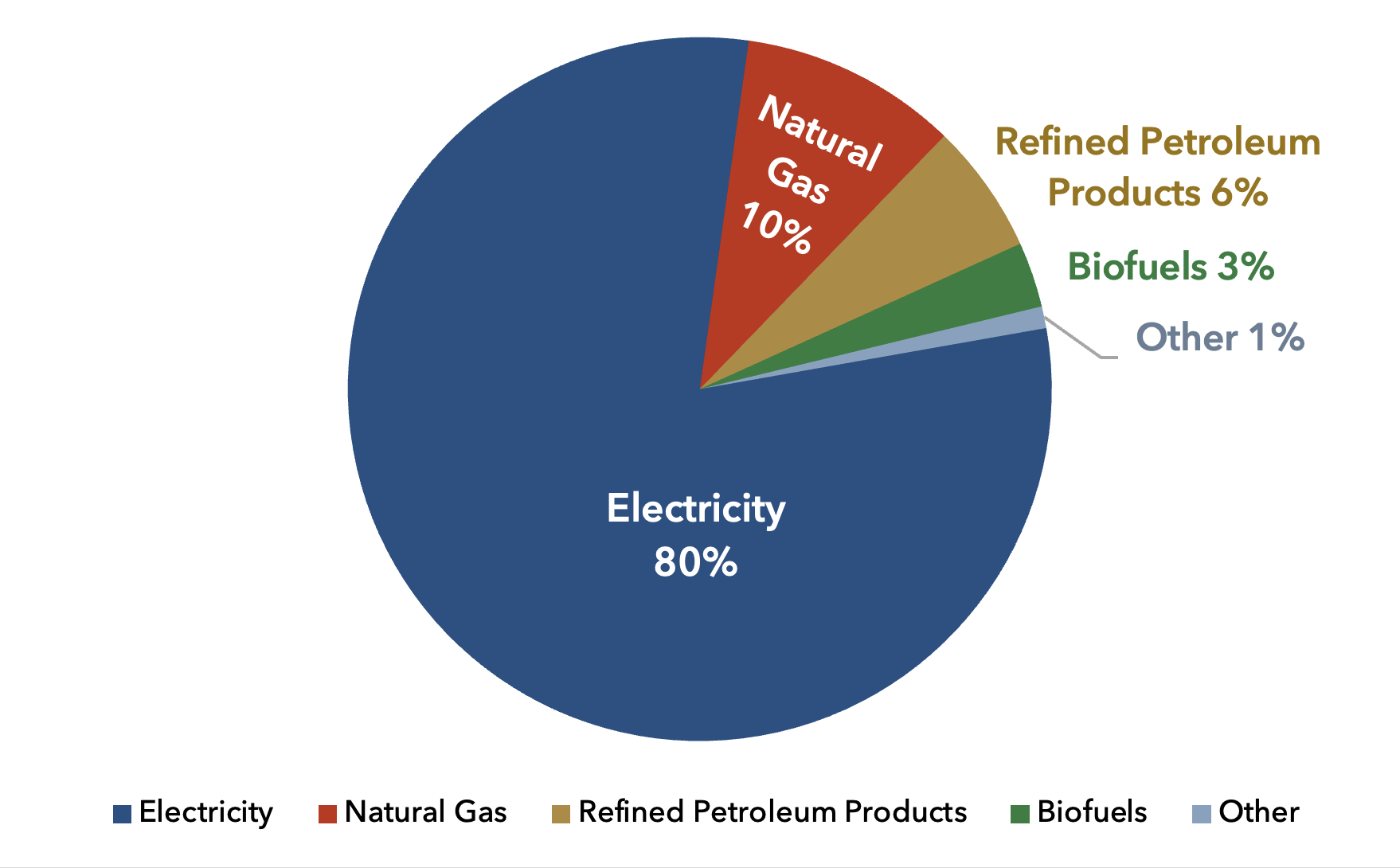
The establishment of a high voltage TransCanada Power Corridor — from the West to the East is proposed here — preferably co-located with existing railway right of ways where practical — as the backbone of a national project. Accelerated displacement of fossil fuels with non-carbon electricity generation (hydro, nuclear, geothermal, wind and solar with storage) is an advantage that Canada has over many jurisdictions and offers the potential for deep decarbonization through a high share of electricity in the final energy demand. Electricity would replace oil and gas as the primary energy carrier for all sectors of the economy delivering significant economic and environmental benefits. As shown in Figure 3, greater than 75 percent of primary energy demand can be electrified economically.
Figure 4: Potential for Final Energy Demand to Be Electrified Economically
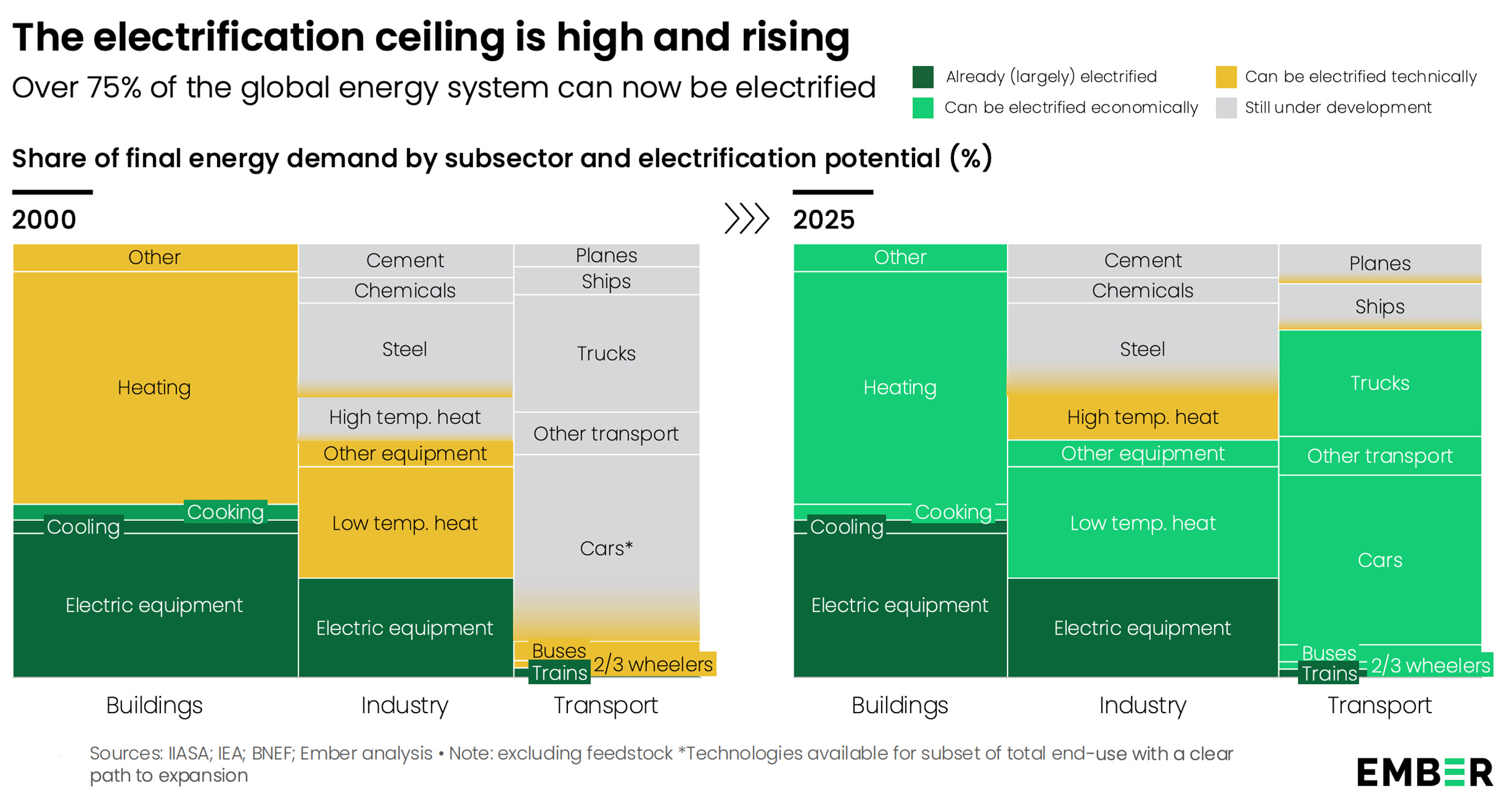
Source: Ember (2025).
Why a National Project?
Energy security and national security are the twin pillars at the core of national sovereignty. The combined diverse energy resources of each province comprise a large strategic national endowment and, when integrated into a national transmission and electricity trading system, becomes a unifying national advantage that offers the possibilities of enhanced trade across provincial boundaries and improving Canada’s national productivity. Global trends indicate anticipated demand for electricity increasing sixfold within the next decade (see Figure 14a and 14b below).
Generation, transmission and intelligent distribution of electricity emerge as the backbone of a digital economy capable of accelerating AI-enabled productivity gains for business enterprises, industry and services. The primary source of new economic value rests on creation of an intangibles economy enabled by access to clean, affordable electricity.
The national narrative must, therefore, necessarily shift away from future investments in oil and gas pipelines to investment in the creation of an west-east power corridor that facilitates the seamless transfer of energy from each province into a national grid. The vision presented in this report of an west-east power corridor satisfies the requirement for a key national strategy: a unifying force that combines social, economic and environmental benefits for all of Canada.
Canada’s Energy System is at a Crossroads
The rupture of an established trading and security relationship with the United States not only poses a unique risk to Canada’s national sovereignty but it compounds the difficulties of achieving a low-carbon transition. In addition, the cascading and unpredictable impacts of climate change — evident in the increasing frequency and severity of fires, floods, droughts, hurricanes, extreme heat and cold — pose fundamental threats to our social and economic well-being.
Canadians rely primarily on fossil fuel resources to meet the demand for energy services dominated by transport (oil), buildings (natural gas), industry and manufacturing (oil/coal/gas), and food production (fertilizers). At end use, the dependence on fossil fuels is the primary source of greenhouse gas (GHG) emissions (CO2): ~75 percent of national carbon emissions. Canada is also a major exporter of oil and gas.2
This blueprint promotes a national strategy for an accelerated transformation of the existing energy infrastructure away from dependence on fossil fuels. Deep decarbonization is achievable through direct displacement of fossil fuels and the substitution of energy demand through electrification of heating, cooling and mobility requirements.3 The creation of a clean, robust and resilient energy system as the backbone for Canada’s future prosperity rests on an increasing share of electricity in final energy consumption.
Figure 5 (below) demonstrates the progression away from nonrenewable fuel types toward a broad-based electrification model of Canada’s energy system. It demonstrates the phased electrification targets to be met in order to achieve 80 percent of total energy consumption as electricity by 2050. Although this is a challenging vision involving a massive expansion of the electricity sector, it is a necessary transformation for addressing the urgency of maintaining Canada's sovereignty.
To achieve the intermediate stepping stone of 50 percent for electricity’s share of the total by 2035, from the current 23 percent in 2025, would be a generational shift, and requires rapid approvals of the existing system’s expansion plans by the provinces. For example, Ontario’s plan4 is in lockstep with the vision presented in this report of the transition required to address the formidable challenge, the targets to be achieved decade over decade and the outcomes in terms of carbon reduction emissions consistent with Canada’s national commitments. In light of the expediency, there is a compelling need for critical decisions to be made by 2027 supported by analysis, approvals and investment decisions to proceed with specific projects.
As projects and proposals begin to come to fruition between 2027–2035, further development of a pipeline of new projects linked to investment decisions must be established through a national framework, preferably by the Government of Canada’s Major Projects Office, for initiation and completion in the 2035–2050 time frame. The TransCanada Power Corridor is a national flagship project, achieved through integration of regional hubs (West, Central, East) connected and operated as part of a national grid allowing substantial benefits of electricity trade across Canada over the coming decades.
Figure 5: Canada: Electricity Share of Final Energy Consumption
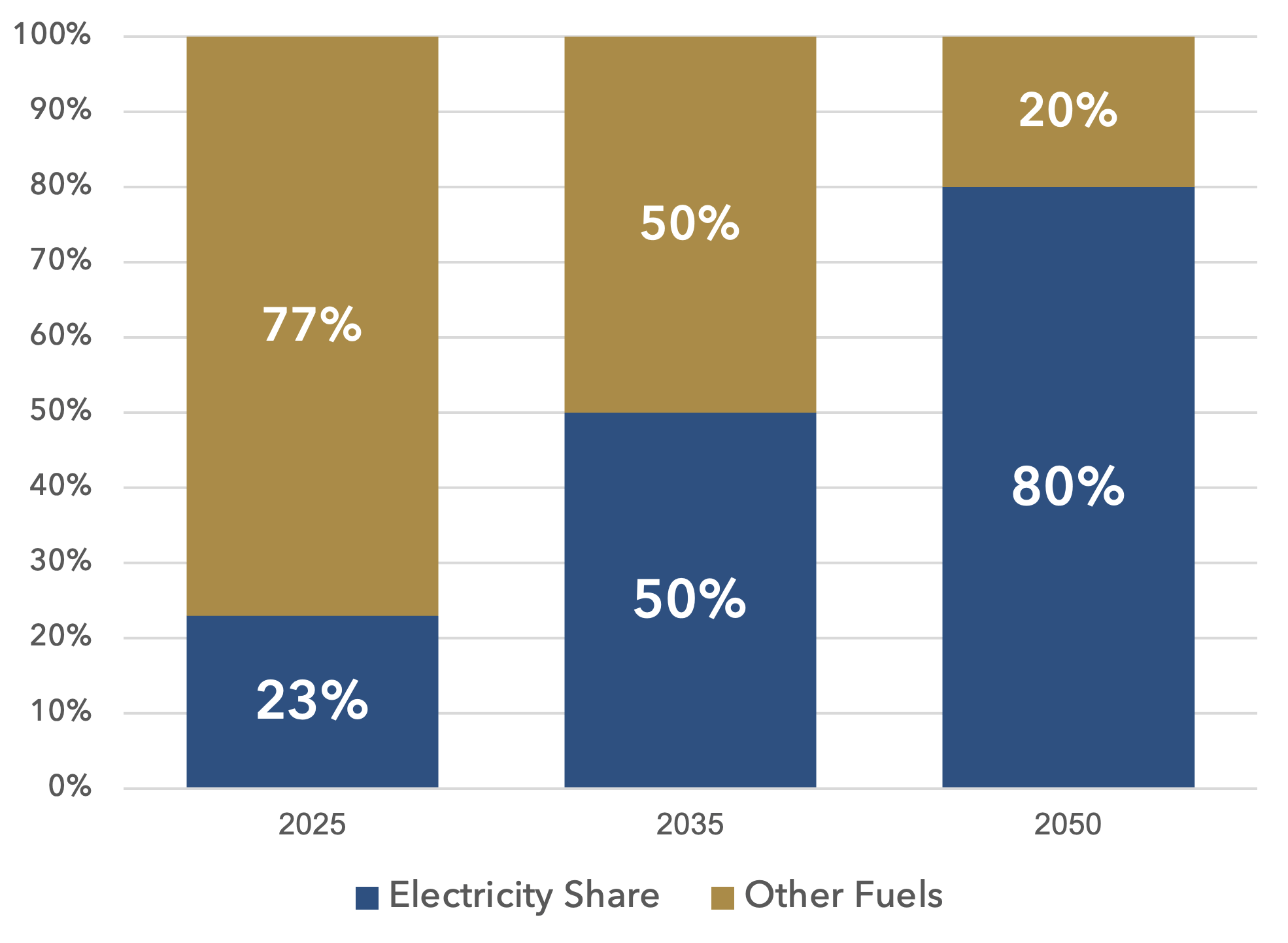
Source: Author. For 2025 share, see Canada Energy Factbook (2025).
Figures 6a and 6b: A Comparative Perspective of Final Energy Consumption for 2025 and the Projected Energy Demand Forecast for 2035 and 2050
Canada: Energy Consumption by Fuel Type (2025)
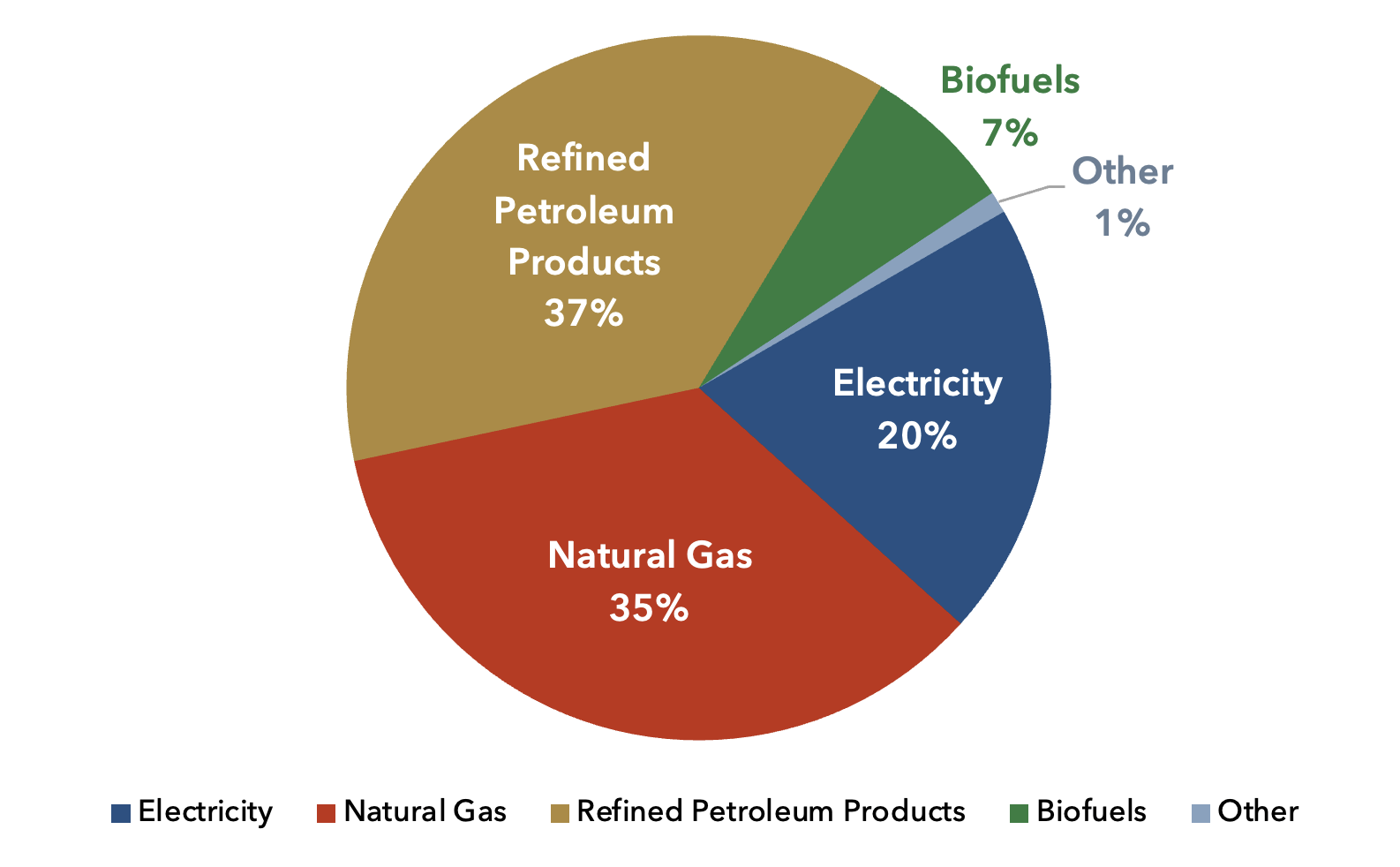
Canada: Energy Consumption by Fuel Type (2035)
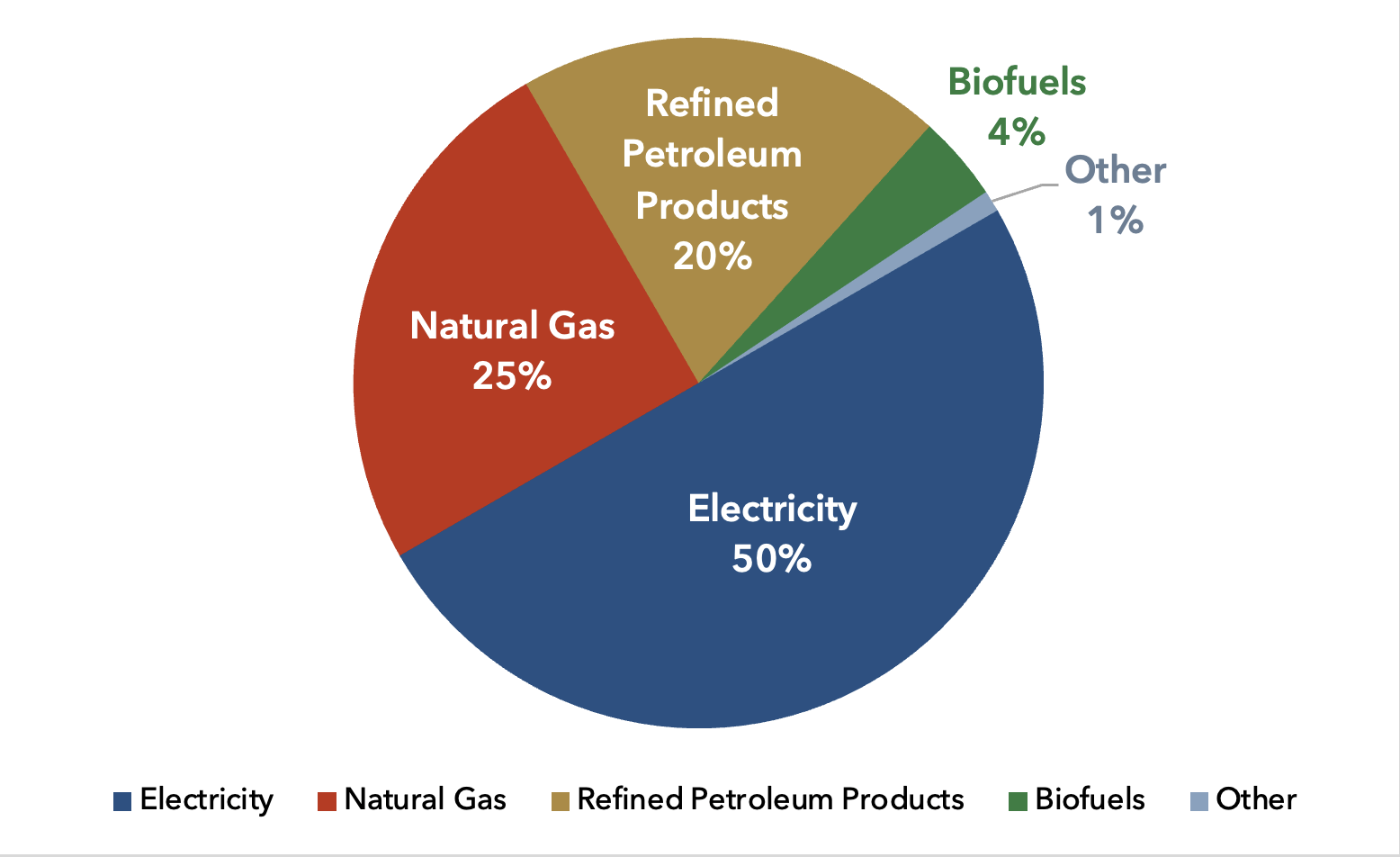
Canada: Energy Consumption by Fuel Type (2050)
Canada: Energy Consumption by Fuel Type (2025, 2035, 2050)
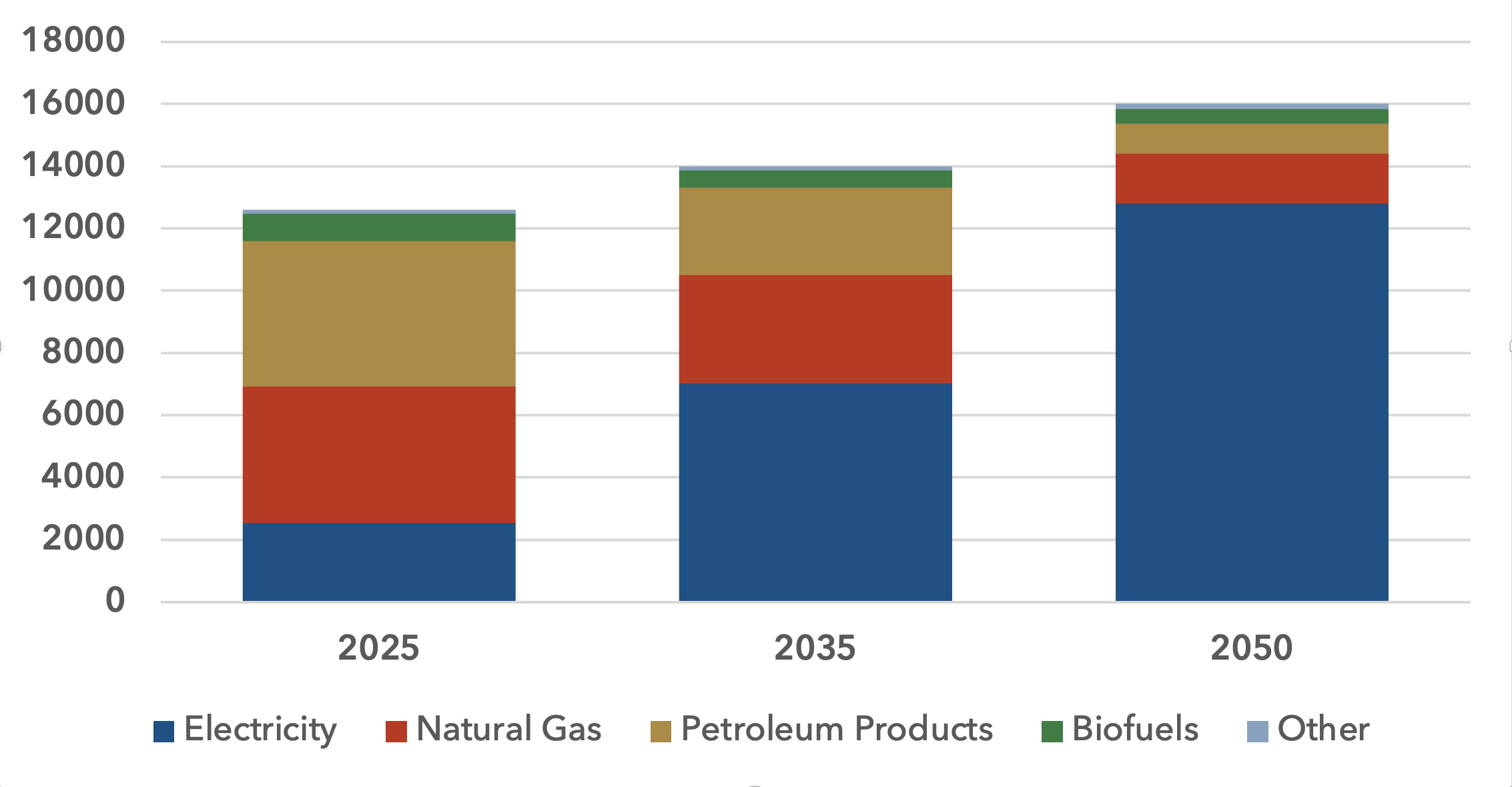
Source: Authors. For 2025 share, see Canada Energy Factbook (2025).
In order to meet these electricity consumption demands and adjust investment/shares in renewable energy, displacement of refined petroleum products and other non-renewables were calculated accordingly (see Table 1 below).
Table 1: Projected Electricity System Growth Requirements for a Canadian Broad-based Electrification Strategy
| Metric | 2025 | 2035 | 2050 |
| Total energy consumption (PJ) | 12600 [3500TWh] | 14000 [3900TWh] |
16000 [4450TWh] |
| Oil and gas share of total (PJ) | 8500 | ~7000 | ~3000 |
| Electricity share of total (PJ) | 2520 (~23%) | 7000 (~50%) | 12800 (~80%) |
| Electricity system growth requirements (TWh) | 700 | ~1950 | ~3550 |
| Installed electricity capacity (GW) | 80 | ~220 | ~400 |
Data Sources: Intergovernmental Panel on Climate Change (2021) and Canada Energy Factbook (2025).
Notes: 1PJ= 0.27778T Wh; Emission factors for combusted oil are 0.073 Mt CO2e per PJ and 0.053 Mt C02e per PJ for natural gas.
Endnotes
1. The TransCanada Power Corridor will emerge from an integration of regional grids — reflecting geography and existing system configurations in the West, Central and Eastern parts of Canada — connected at key nodal points for seamless transfers of electricity trade, reliability enhancements and security of the national system.
2. This study focuses on national energy consumption and a vision for decarbonization that allows for a clear accounting of the emissions and strategies to meet the national targets for reduction of GHGs. The exports constitute Scope 3 emissions.
3. Emphasis on electrification as an effective pathway to decarbonization is widely recognized. See Dion et al. (2022); Dion et al. (2021); Electric Power Research Institute) (2021); Energy Transitions Commission (2021); IEA (2021).
4. Ontario’s ”Energy for Generations” plan was announced in June 2025. See www.ontario.ca/page/energy-generations.