
[types field='brief-author-role'][/types]
Transmission
TransCanada Power Corridor: High Voltage System
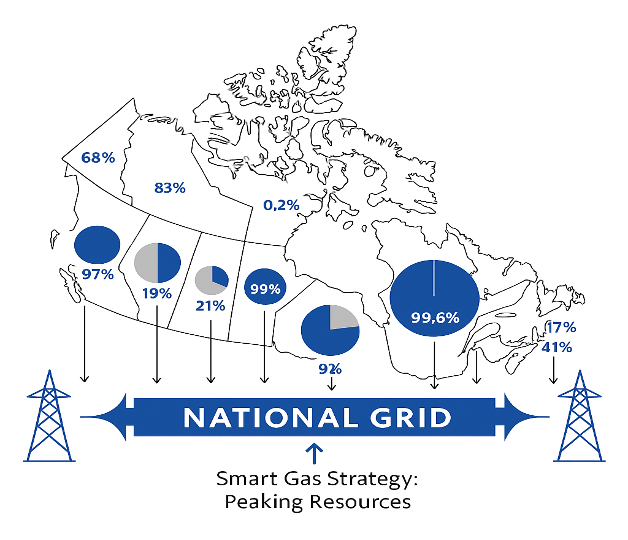
Canada has one of the world’s cleanest electricity systems (see Figure 13 above), with more than 80 percent of its electricity supply being emissions-free, and its vast land mass offers abundant clean energy resources that can be developed to deliver a cost-effective supply of abundant, affordable energy.
Role of Natural Gas
The goals of energy security and substantial reduction of GHGs on a continent-wide scale are achievable via enhanced electricity trade, utilizing Canada’s low-carbon electricity advantage and significant reductions in fossil fuel use. A “smart gas strategy” for natural gas as a peaking resource will remain an important part of system operations as a cost-effective response for maintaining grid reliability to provide flexibility for use of variable renewable resources. Figure 15 provides a visual demonstrating how Canada’s provinces and territories already possess substantial proportions of non-emitting electricity resources (reflected in the blue segments of the embedded pie charts) which provide a strong foundation for an integrated national grid, while a limited smart-gas peaking strategy offers the necessary flexibility to manage higher peak loads and periods of renewable intermittency during the transition. A ten to twentyfold increase in clean electricity trade across Canada from current levels would be required to deliver on such lofty goals but the transition can be achieved over the next 40 years through the development of the necessary transmission infrastructure.
Delivering electricity in the order of 2,000 TWh annually over long distances — comprising a mix of hydro, nuclear, geothermal, wind and solar with storage capabilities — as an integrated system would require a grid capable of handling significantly higher peak loads compared to the existing system. This implies a need for construction of additional HVDC/AC lines for interconnecting provinces and building new substations with real-time monitoring, advanced fault response capabilities, reliability and the balancing of supply and demand over a vast geography for flexibility and security of supply. The illustrations below (Figures 16a and b) are a visual depiction of the potential opportunities if the high-voltage grid is co-located with the freight transport infrastructure.
Figure 16a, 16b: Concept Illustrations of the High Voltage Grid and Freight Transport
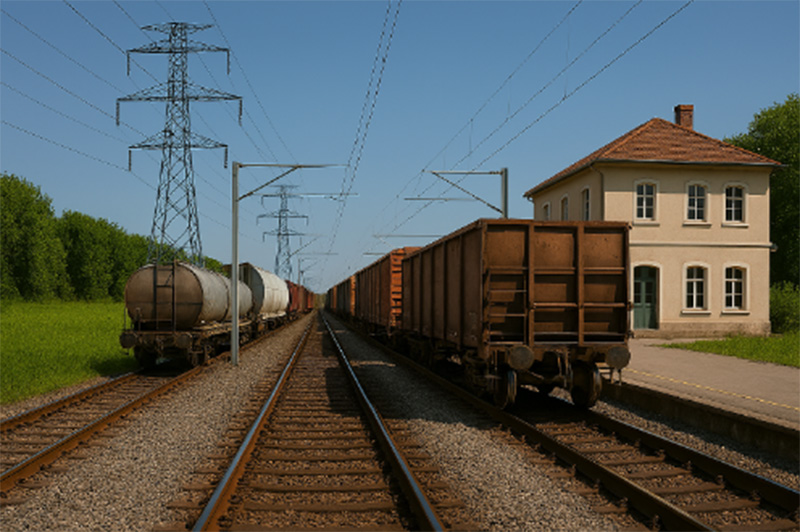

Sources: Stock image and AI generated composite of the potential for integrating railway right of ways with the power grid.
Major expansion of electricity trade buttressed by interconnections and transmission links acting as regional hubs between provinces is integral to the potential benefits and economic development goals to be enabled by a national grid. When electricity trade is fully integrated into a national system, it can become a powerful source of mutual benefit at the regional levels and a promising pathway to a low carbon economy.
A historic opportunity for a dramatic shift in thinking and support for a national energy strategy has been presented in this report, in light of current geopolitical developments. What is required is the recognition that energy security, national security and our commitment to protecting national sovereignty are linked. Thus, enabling energy transfers on a large scale across provinces as trade in electricity also allows Canada to exploit its low-carbon electricity advantage to become fully integrated with energy trade and national climate change policies.
Barriers to Be Overcome
Lined up against a vision of a national power corridor capable of fostering expanded electricity trade across provinces are a number of formidable forces. The weight of history is one, but geography, long distances and large investment costs are others. The most difficult aspect of planning is the political calculus of the day, which conspires against a long view of an energy trade strategy to help realize the fullest potential of clean electricity within the Canadian energy system.
The paradigm of “province-wide self-sufficiency” dominates the public discourse and is prevalent in regulatory and system planning decisions. Support for expansion of electricity generation and transmission facilities — on a vastly increased scale — as part of a deliberate national strategy to foster interprovincial trade is either limited or met with hostility. Twinning Canada’s electricity trade strategy with climate change goals (through high-value electricity production and transmission) has the potential to deliver vast economic prosperity with a much lower national carbon footprint.
Existing System is Balkanized
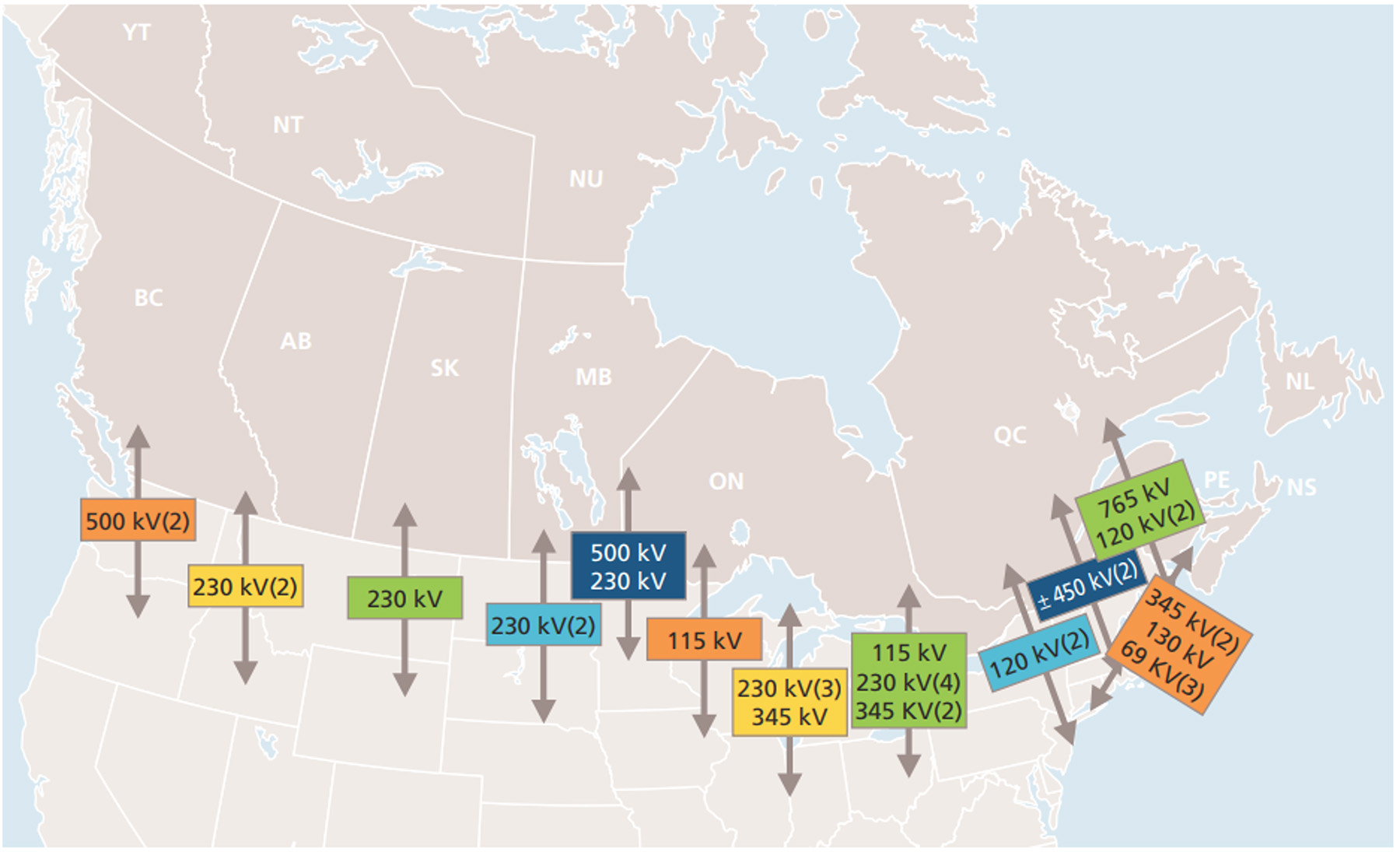
Source: Nathwani (2015, pp.104-105).
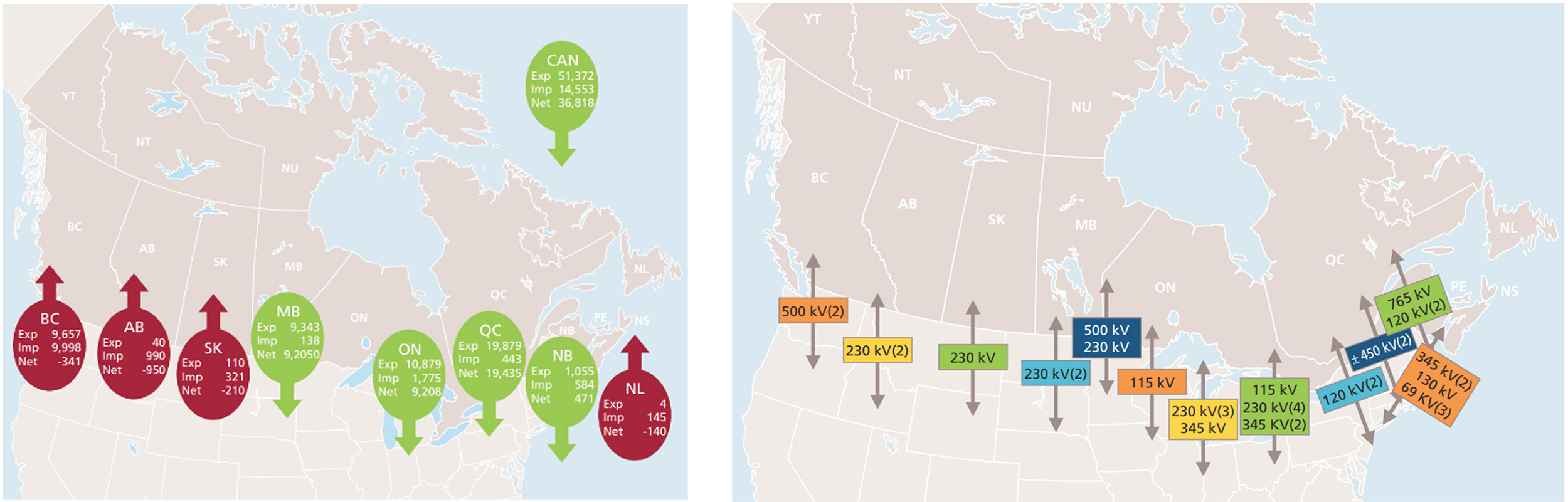
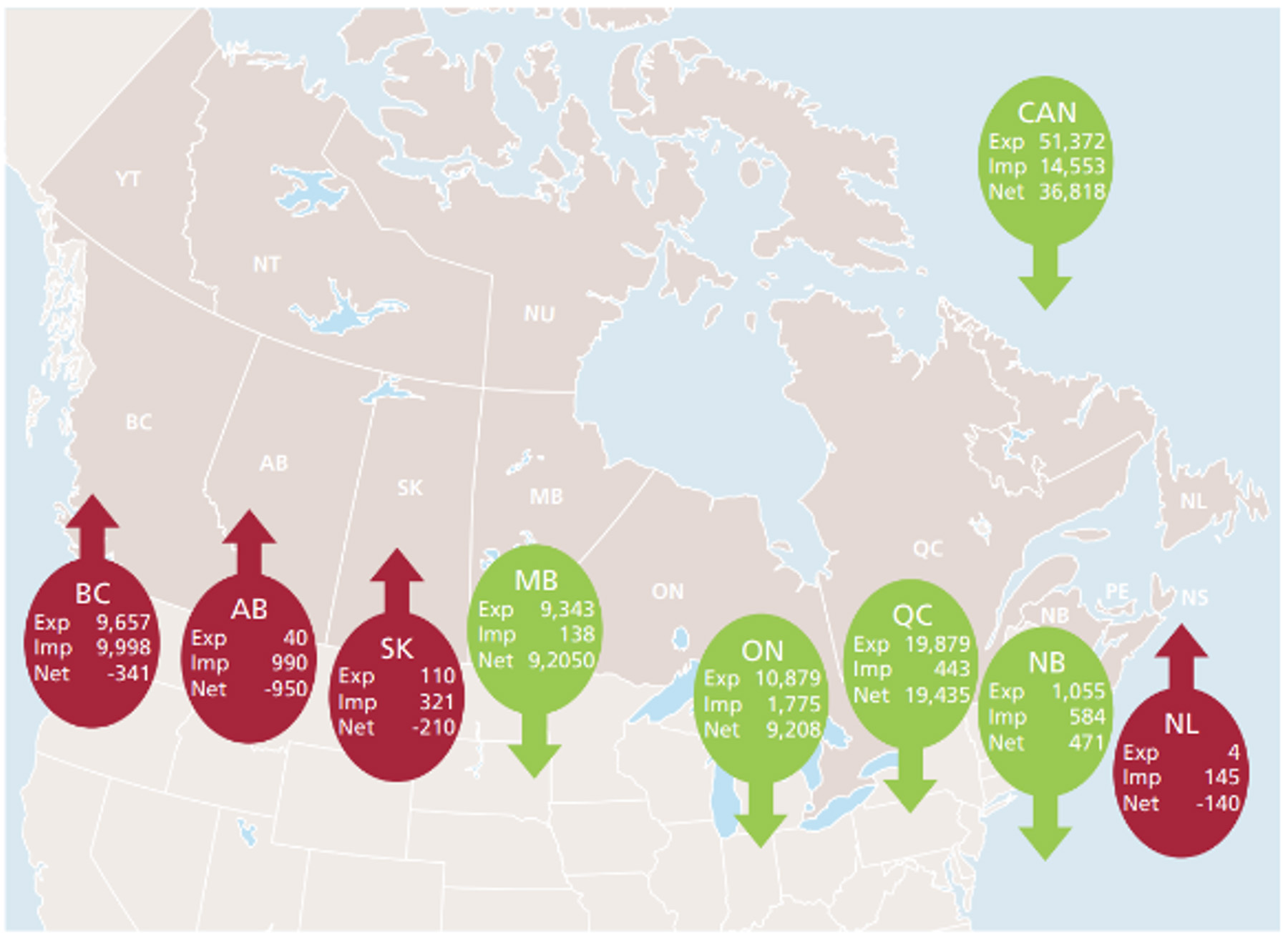
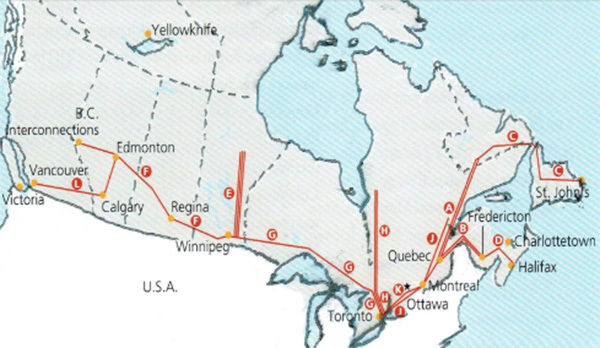
The transmission capacity envisaged to allow the development of new hydro and nuclear generation are shown above. They are still focused on power transfer along a north–south axis to serve US markets. The power grid of the future must be capable of transmitting a diverse mix of electricity generation supply sources that can strengthen the economic potential of each province in an West–East direction as shown below (Figure 18).
The figures below demonstrate the existing interconnection flow of power from Canadian hydro sites to a limited number of US states. The trade patterns reveal the north–south flows into the US markets and highlight the role of interconnection capacity. Current electricity trade is primarily based on long-term fixed rate contracts (for example, Quebec into New England states). The level of trade across provincial boundaries is low because of a lack of enabling infrastructure.
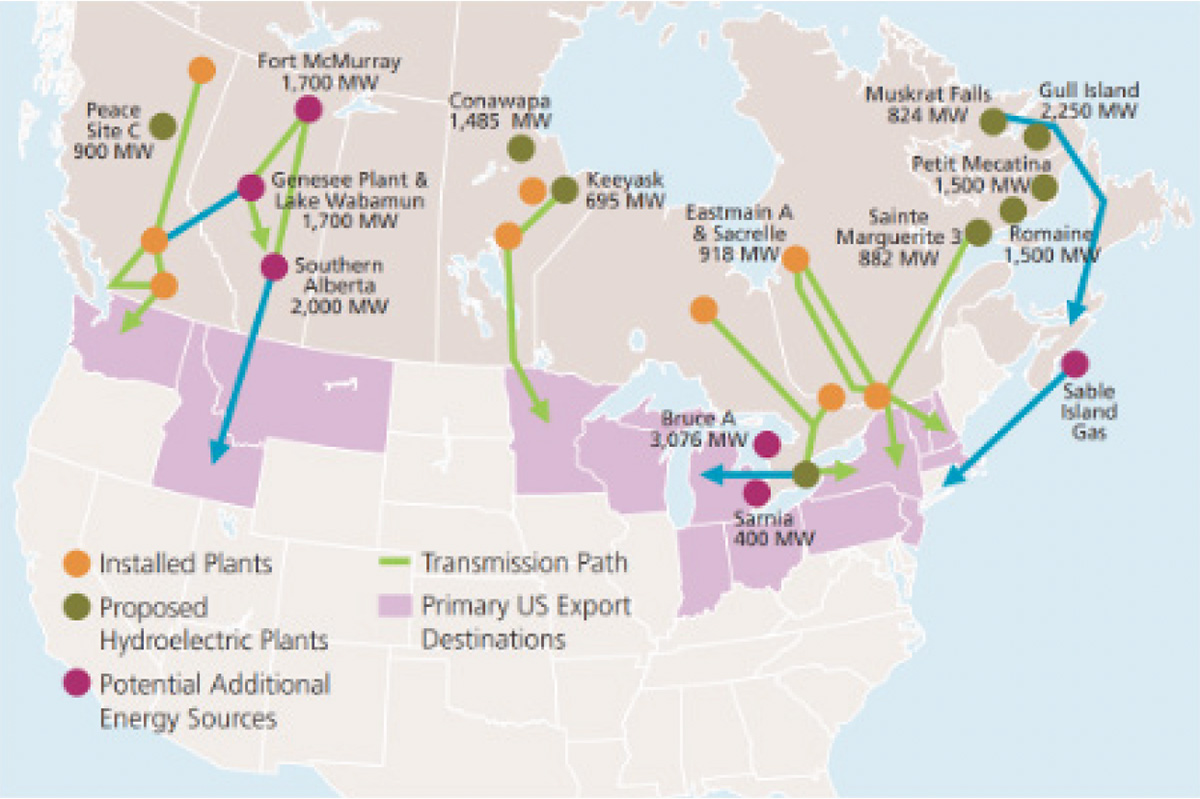
Figure 18: Map Charting Electricity Trade Flows North–South
Sources: Nathwani (2015). Source: Nathwani (2015, pp.104-105).
The transmission capacity envisaged to allow the development of new hydro and nuclear generation are shown above. They are still focused on power transfer along a north–south axis to serve US markets. The power grid of the future must be capable of transmitting a diverse mix of electricity generation supply sources that can strengthen the economic potential of each province in an West–East direction as shown below (Figure 18).
The figures below demonstrate the existing interconnection flow of power from Canadian hydro sites to a limited number of US states. The trade patterns reveal the north–south flows into the US markets and highlight the role of interconnection capacity. Current electricity trade is primarily based on long-term fixed rate contracts (for example, Quebec into New England states). The level of trade across provincial boundaries is low because of a lack of enabling infrastructure.
Figure 18: Map Charting Electricity Trade Flows North–South
Railroads and the Power Corridor
Currently, electrification of the transportation sector is primarily focused on EVs, but it will spread widely to other modes such as trucking and freight and passenger transport by rail in the coming decades. Inter-regional and continent-scale energy markets is one lens through which to view the dynamic context of rail electrification in concert with an east–west power corridor.
A detailed evaluation and consideration for the siting of a new power transmission corridor, co-located with existing railroad right of ways where it is practically feasible, is strongly recommended. A detailed evaluation and consideration for the siting of a new power transmission corridor, co-located with existing railroad rights-of-way where practicable, is strongly recommended. In addition, siting opportunities along major highways and near brownfield sites should be assessed to expand available routing options. The primary goal of this strategy is to minimize environmental impacts and accelerate the permitting and approvals process.
Figure 20: A Map of Canada’s Railroad Right of Ways
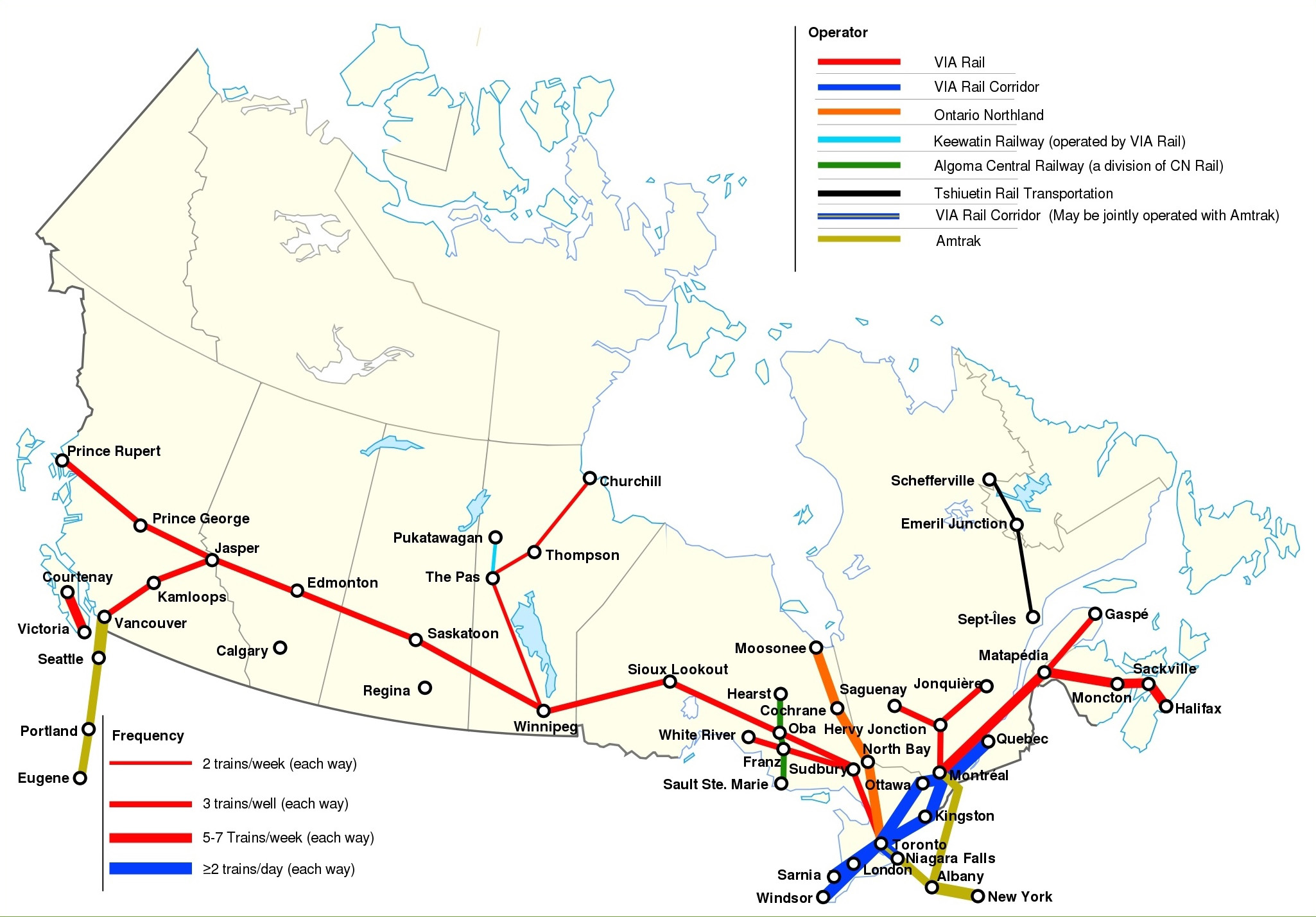
Source: Van Uytven (2023).
Canada’s railroads, brought to completion by a dogged commitment to a unifying force for national identity, remains an ideal connector between location-constrained renewable resources (distant hydro, wind and solar in each province) that are increasingly in demand and major power markets. Railroad rights of way could be employed to site linear electric transmission infrastructure, providing a source of new revenues. Railway electrification and modernization of the stock with battery powered trains, with the capability to sell excess energy, including regenerative power, back into the grid, is technically feasible.
As other major sectors of the economy become electrified, the advantages of rail electrification integrated with a power transmission corridor presents a historic moment for transformative change. From an west–east perspective, much of Canada’s electric transmission system remains a patchwork of provincial and territorial networks with limited interprovincial capacity. The proposed vision seeks to transform this fragmented structure into a cohesive, linear transmission backbone spanning the country.
Electricity transmission facilities capable of moving large amounts of power on a continental scale in the North American context have been well-established and developed over the past six decades. The benefits of an east–west interconnection, in the US context, have been documented in a comprehensive study by the National Renewable Energy Laboratory (Howland 2021).
Emerging power markets and the need to access remotely located renewable resources (hydro, wind, solar, geothermal) will increase the pressure to build greater transmission system capacity including major HVDC facilities. Building on well-established precedents,6 an example of an innovative partnership between an electric utility and a railway company is the SOOGreen HVDC underground link, over a distance of 560 km (Iowa to Illinois), connecting the Midcontinent Independent System Operator and PJM energy markets. The line installed within the Canadian Pacific Railway’s right of way not only reduced the time for permitting but has minimal visual impairment given the land-use footprint is substantially low compared to an overhead HVDC line requiring approximately 30 m of right of way. This concept is equally relevant for siting a transmission corridor in the vicinity of highways or other brownfield sites.
Figure 21: SOOGreen HVDC

Source: SOOGreen HVDC Link Project, Renewable Energy World (2020).
The potential for a convergence of the electricity sector and the railroad sectors needs to be explored further. Potential benefits include:
- Improved timeliness for approvals and community acceptance during the planning and permitting process. An existing rail right of way as a corridor for power transmission has significant potential for reducing land-use impacts and environmental challenges related to greenfield development.
- Technical innovations and emissions reductions. A more flexible, digitalized railroad network, with major battery installations, control and monitoring systems, catenary systems and two-way power flows and control for freight transport would allow cost optimization and emissions reductions by eliminating fossil fuels in freight transport.
Smart Distribution Grids
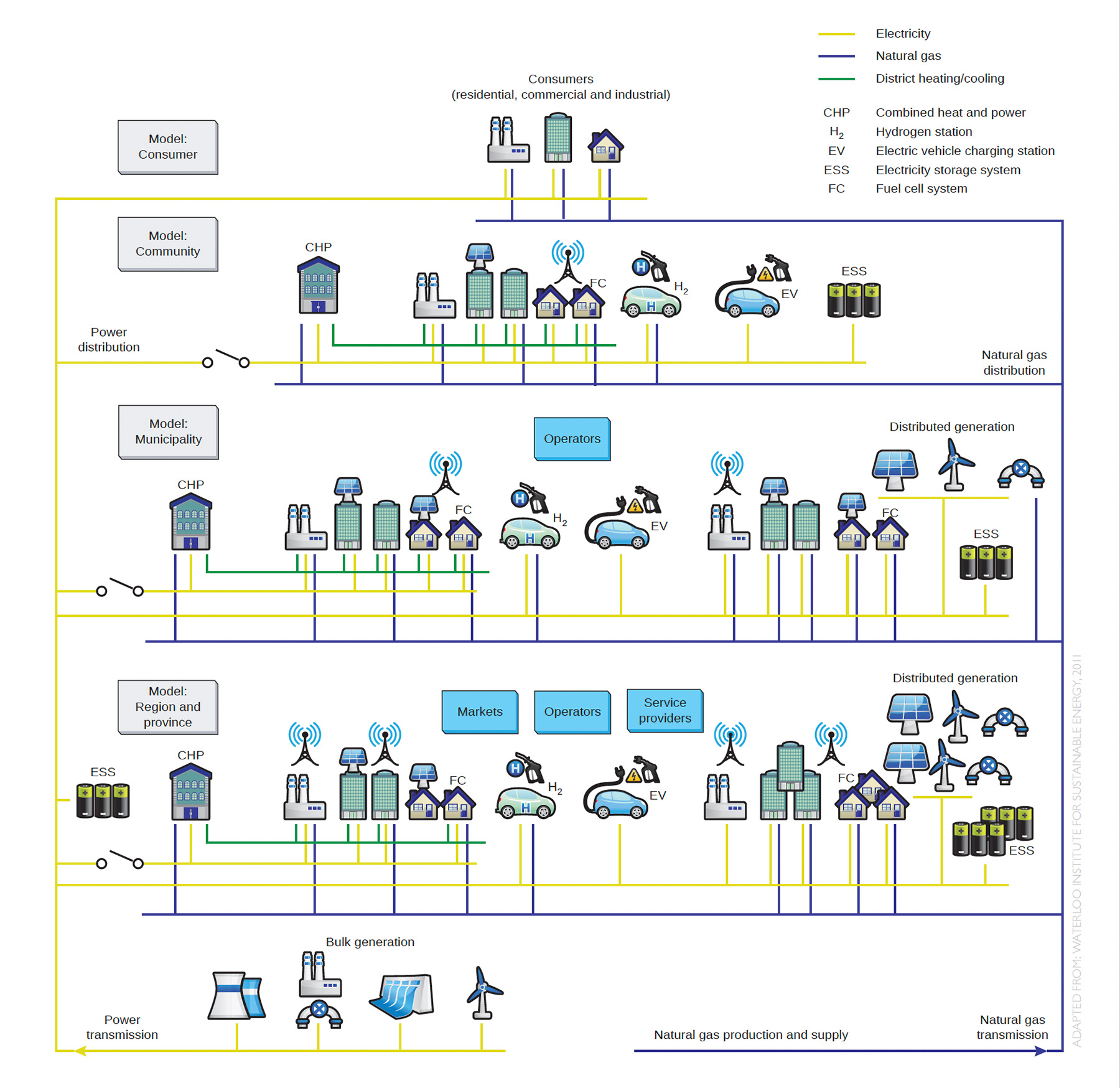
While the energy systems of the twentieth century were built on cheap and abundant fossil fuels, those of the twenty-first century will rely on pervasive information and communication technologies (ICT). These systems will enhance efficiency, integrate diverse energy resources, and connect smart distribution networks to a high-voltage national transmission grid designed for resiliency and optimized performance.
Figure 22: An Energy Diagram of Full Integration All Sources
Source: WGSI, (2012, 93).
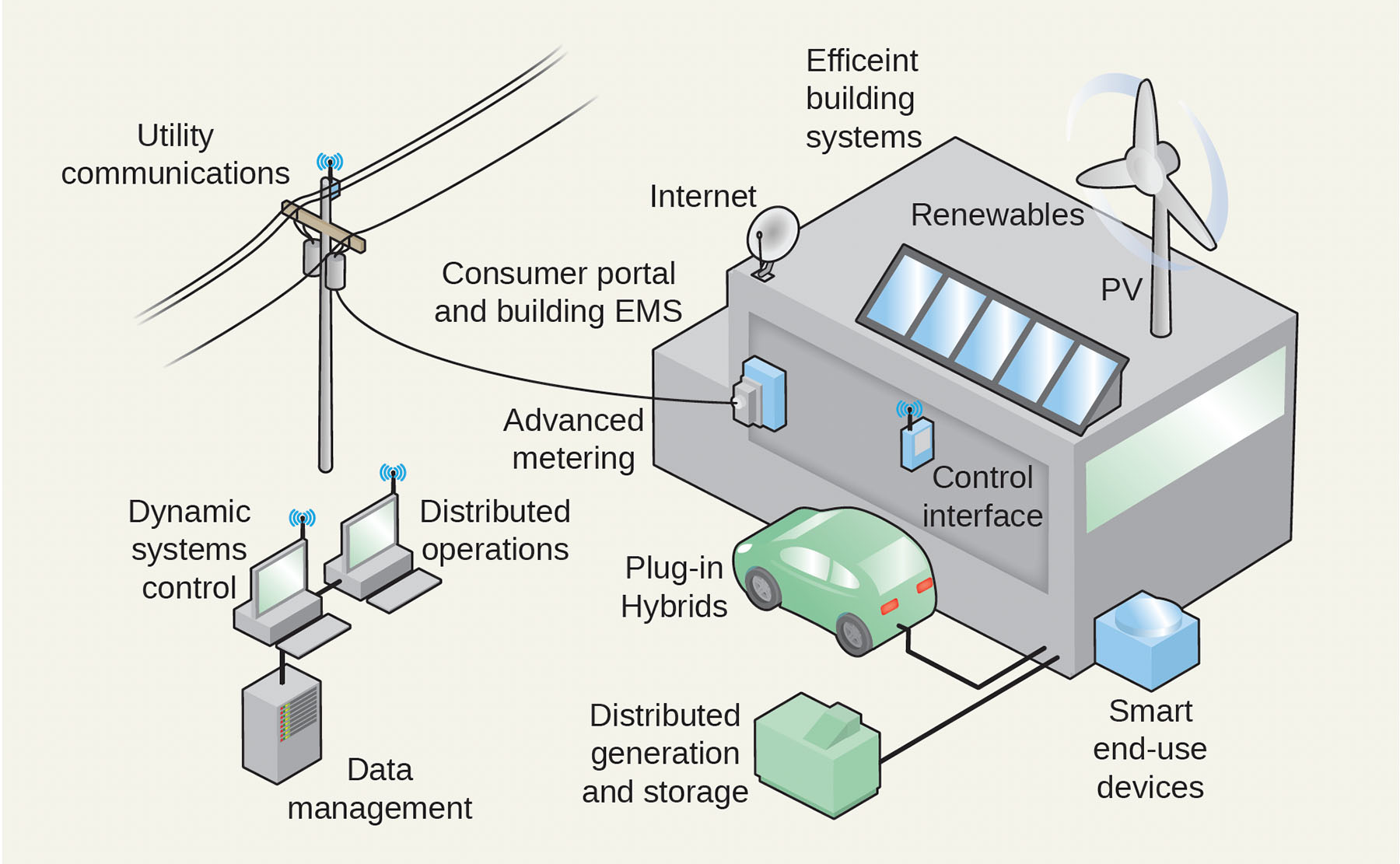
Diverse systems, components, devices and sensors enabled through ICTs can respond — almost symphonically — in real-time to the differentiated needs and demands of consumers, communities, municipalities and regions. A seamless integration of diversity is the paradigm-shifting potential of an intangible economy. An ICT-enabled clean energy system and AI-enabled productivity boost opens the energy sector to unprecedented levels of human-machine interaction without the environmental burdens that come from traditional fossil fuel-based systems.
Energy supply and consumption, through deployment of digital infrastructure, supports demand response and load balancing. Integration of EVs, heat pumps, smart buildings with solar panels storage as part of VPPs help influence behaviours of individuals with real-time pricing while adding to overall system stability and resilience.
Figure 23: A Visual of a Smart System
Source: WGSI (2012, 92).
Information-rich smart grids that coordinate electricity supply with energy storage units, including batteries and superconducting technologies, can be sited close to dense urban loads, while communication technologies and demand-response systems that enable real-time balancing of supply and demand from local generation to the grid, to enhance the sustainability and resilience of the overall system (Waterloo Global Science Initiative [WGSI] 2012, 36–45; 90–101).
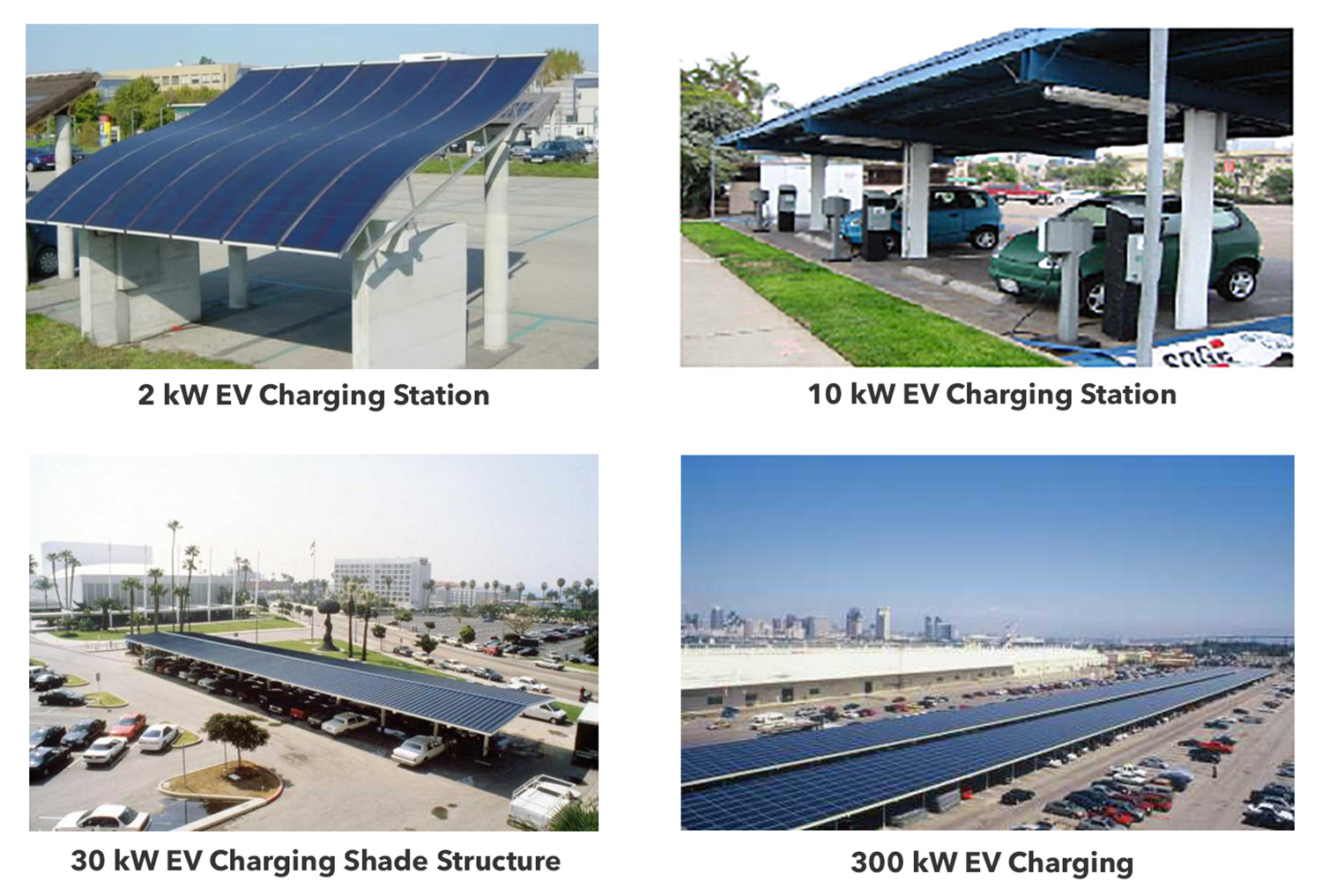
De-centralized energy generation and use within the distribution network are capable of reducing peak demand on the transmission system capacity requirements through EVs connected to solar panels, localized storage and bi-directional power flows converting photons to electrons displacing oil with minimum impacts on land use. Exponential growth in global EV sales7 is projected to reach twenty-two million units in 2025 — up 25 percent from 2024 — with EVs accounting for one in four new vehicles sold worldwide. Under current policies, their share of global auto sales is projected to rise to about 40 percent by 2030. The conversion of major parking lots into EV charging stations can further reduce oil dependence, ease pressure on the transmission system, and enable more effective land use in urban areas.
Figure 24: EVs in a Parking Lot as Localized Generation
Transmission Summary
Harmonization of provincial regulatory approaches with an overlay of a national framework for enhanced east–west trade in electricity will be critical to realizing benefits for all Canadians.
The scope of efforts related to harmonization of provincial regulatory mandates can be targeted toward changes in the regulatory requirements and adjustments only for approvals of investment decisions and cost-recovery of interconnection and transmission facilities. The role of the federal government would be limited to assistance necessary for financing and developing a national grid. To allay concerns related to the intrusion of federal authority into provincial jurisdiction, all other aspects of provincial regulatory authority over the development and approval of in-province resources can remain unchanged within the mandates of the provincial energy regulators.
A deliberate strategy for increasing interprovincial exports of clean electricity to be adopted by each province for national benefit is recommended.
Endnotes
6. Examples of transmission links that are in service include: Piedmont-Savoie Italy to France [+/-320kV, 200km., 2 circuits, 1200 MW], Norway to UK Sealink [+/-500kV, 700km, 1400 MW], The Celtic Interconnection, Ireland to France [+/-320kV, 570km, 700 MW], The Quebec to NYC Champlain-Hudson Power Express [+/-400kV, 540km, 1250 MW] and in Germany the Suedlink and SuedOstLink provide 8000MW of capacity with the Nordlink connecting Norway to Germany for an additional 1400 MW capacity.