
[types field='brief-author-role'][/types]
A Reimagined Energy Landscape for Canada:
Journey to 2050
Reimagining Canada’s energy infrastructure for the twenty-first century requires revisiting Sir John A. MacDonald’s vision of Canada. Given the historical challenges of early nation-building in the late 1890s, leveraging the key enabling technologies of that era - the railway and railroad - as unification tools proved to be a successful endeavour.
The TransCanada Power Corridor is the critical enabler to establish broad-based electrification of the entire economy as the cornerstone of a national strategy for improving productivity and reducing the threats to sovereignty. A continent-scale national grid, linking the West to the East becomes the backbone of Canada’s national energy system with opportunities for enhanced trade in electricity across the provinces.
The objective of minimal dependence on use of fossil fuels (<20 percent share in final energy consumption) by 2050 can be achieved through a national flagship project underpinned by a strong commitment to the principles of collaborative federalism and advancement of Canada’s collective national interest.
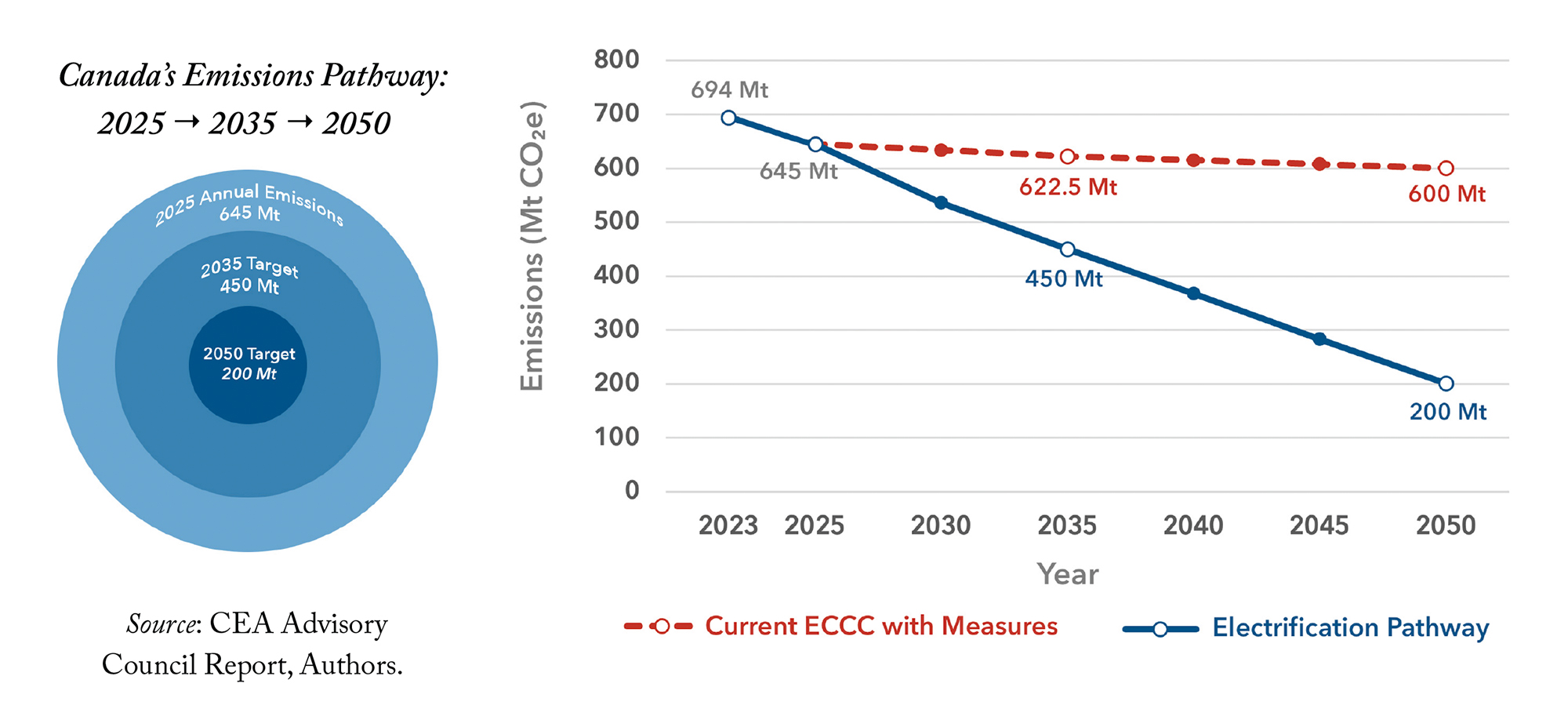
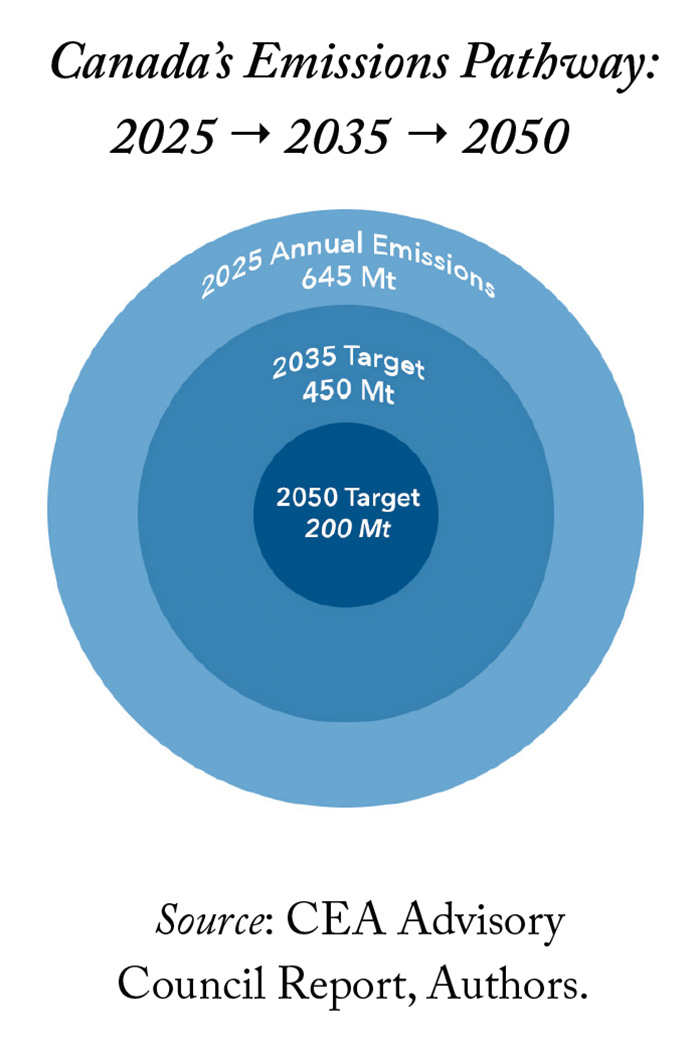
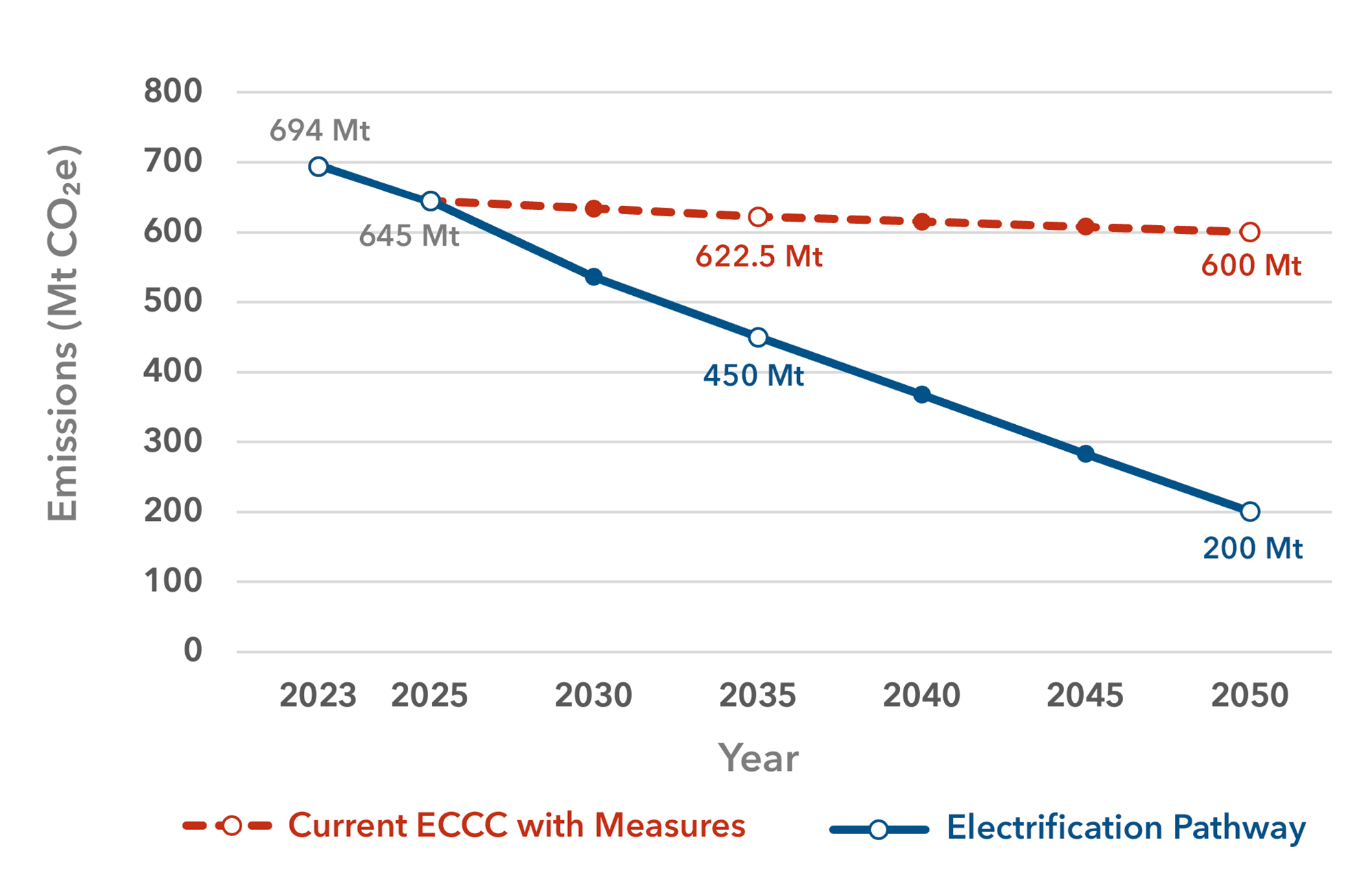
Figure 7 below demonstrates the net positive effects of deep electrification on GHG emissions reduction. Environment and Climate Change Canada’s (ECCC’s) projection anticipates a reduction to just above or below 600 Mt by 2040 under current measures. The energy-displacement scenario presented in this report envisions a much more aggressive emissions drop, reaching around 200 Mt by 2050.
Figure 7: Projected Reduction of GHG Emissions in Canada (2023–2050)
Source: Authors.
A clean, electrified energy landscape will not only deliver economic, social and environmental benefits, but also serve as a transformative national project — creating new talent, skill sets and technological capabilities, as well as avenues of growth that would otherwise be impossible to establish in Canada. An "electrons-based" energy system will drive information and communication technologies (ICTs) and the potential of AI-enabled value-creation for all sectors of the economy.
The energy system today is a mirror to the past. It is deeply rooted in the endowment of natural resources within each province and the historical context of its development. The choices that were made reflect the accommodation and compromises among leaders and communities in the past. The complex linkages that underpin the development, design, operation, delivery and flow of energy services from extraction to production and final use must be considered in the investment analysis for the initiation of such a project. In addition, review of the entire context of regulation and management of a national grid in Canada would be necessary given the primacy of provincial jurisdiction over natural resources.
To begin, we ask the question, “What future do we want?” and then work backwards to identify the pathways and technologies that can bring about a transformative change of an energy system no longer dependent on fossil fuels. The entire infrastructure supporting the end-state of a low-carbon energy ecosystem is feasible by considering the promise and potential of emerging technologies across the entire supply chain from generation, transmission and distribution and end-use applications.
Outlined below are the necessary building blocks comprising the major features of the overall energy system architecture for Canada to 2050: generation capacity of each province; transmission and distribution of energy with integration of each province’s diverse energy supply into a national grid; and the development and distribution of energy to end users through smart grids and distributed local-level resources.
In lieu of oil and gas as the primary vectors for meeting Canada's energy demand, an electrified future with dedicated investments to support a high-voltage national electricity transmission corridor (high-voltage direct current [HVDC] or alternating current [AC]) as the primary carrier of energy services for inter- and intra-provincial requirements is envisioned.
This vision requires a rapid transformation of Canada’s energy system that is no longer dependent on fossil fuel resources at the base of the energy pyramid. Electricity emerges as the key energy input across all sectors of the economy. The availability and the diversity of supply resources within each province introduces flexibility to displace oil and gas resulting in meaningful lowering of emissions and mitigating the threats of climate risk.
Electricity is a high-value manufactured product and a core enabler of the transformation required for a low-carbon energy economy. Smart (intelligent) distribution of electricity through decentralized networks will shape all aspects of our lives — where we live, work, play, learn, communicate and plan for thriving communities.
Global trends are accelerating the demand for electricity: adoption of digital technologies in business and industry (generative AI, data centres), electric mobility for transport (electric vehicles [EVs], mass transit, fleets and heavy trucks), space cooling and heating (heat pumps, geo-exchange). Diverse primary energy resources in each province (hydro, wind, solar, nuclear, geothermal and bioenergy) are capable of displacing fossil fuels throughout the energy supply chain.
With the compounded benefits of achieving a low-carbon energy system through the development of clean energy resources, a deliberate investment strategy for infrastructure development is required to shape and meet the demand for electricity. A commitment to promote an increase in the share of electricity in final energy demand will act as a spur for increased economic productivity in industry and commercial enterprises.
Measurable, Tangible Action
The clearest tangible action is to increase the share of electricity in final energy consumption. The current existing share of electricity in final consumption is at 23 percent. In two steps, the share of electricity in final energy use must rise to 50 percent by 2035 and 80 percent in 2050. Clean electricity development and its increasing share in the final energy consumption becomes the propellant of economic growth and the foundation for new economic value creation — the intangibles economy. Such an ambitious transformation necessarily involves a change of the vectors of energy transfer: displacement of oil and gas pipelines by a national power transmission corridor — a departure from energy transfer by molecules of hydrocarbons with electrons from hydro, nuclear, solar and wind, and geothermal resources.
The pathway to 2035 is an intermediate stepping stone that builds on the existing system’s expansion plans of each province with clear commitments to investment decisions required for specific projects in the next 24 months. The investment decisions for the intermediate (2035–2050) time frame would be governed by a consideration of new and emerging innovations, technologies and feedback from lessons learned in the early phase. A “stage-gate” approvals process for critical investments in a broad portfolio of clean energy technologies will be an iterative process that allows for adjustments and the incorporation of new technologies to deliver the end-state of 80 percent share of electricity in total consumption in the 2050–2060 time frame.
The basic building blocks for the transformation include:
- Transmission: High voltage (AC or DC) lines over long distances including interconnections with provincial grids.
- Generation: A clean electricity supply mix, adjusting for the natural resource endowment of each province and its technical and economic feasibility, will be a combination of primary non-carbon resources that include:
- hydro;
- nuclear;
- wind and solar (on a large scale) with storage; and
- geothermal resources (shallow and deep).
- Smart Grids: A highly sophisticated and resilient modern grid with advanced sensors and two-way communication capabilities to manage the flow of electricity also allowing for efficient management of distributed energy resources (DERs), micro-grids, and virtual power plants (VPPs) with a strong digital presence (ICT and AI applications).
- End Use: Electrified transport (EVs, mass transit, fleets and freight), and a transition to net-zero homes, which are ideally 100 percent electrified and, as much as possible, include on-premise solar photovoltaic (PV) generation. Advanced heat pump technologies for heating and cooling offer cost-effective electrified solutions in the commercial and industrial sectors for process heat.
All of the above offer a clear pathway for cost-effective displacement of oil and gas with electricity.
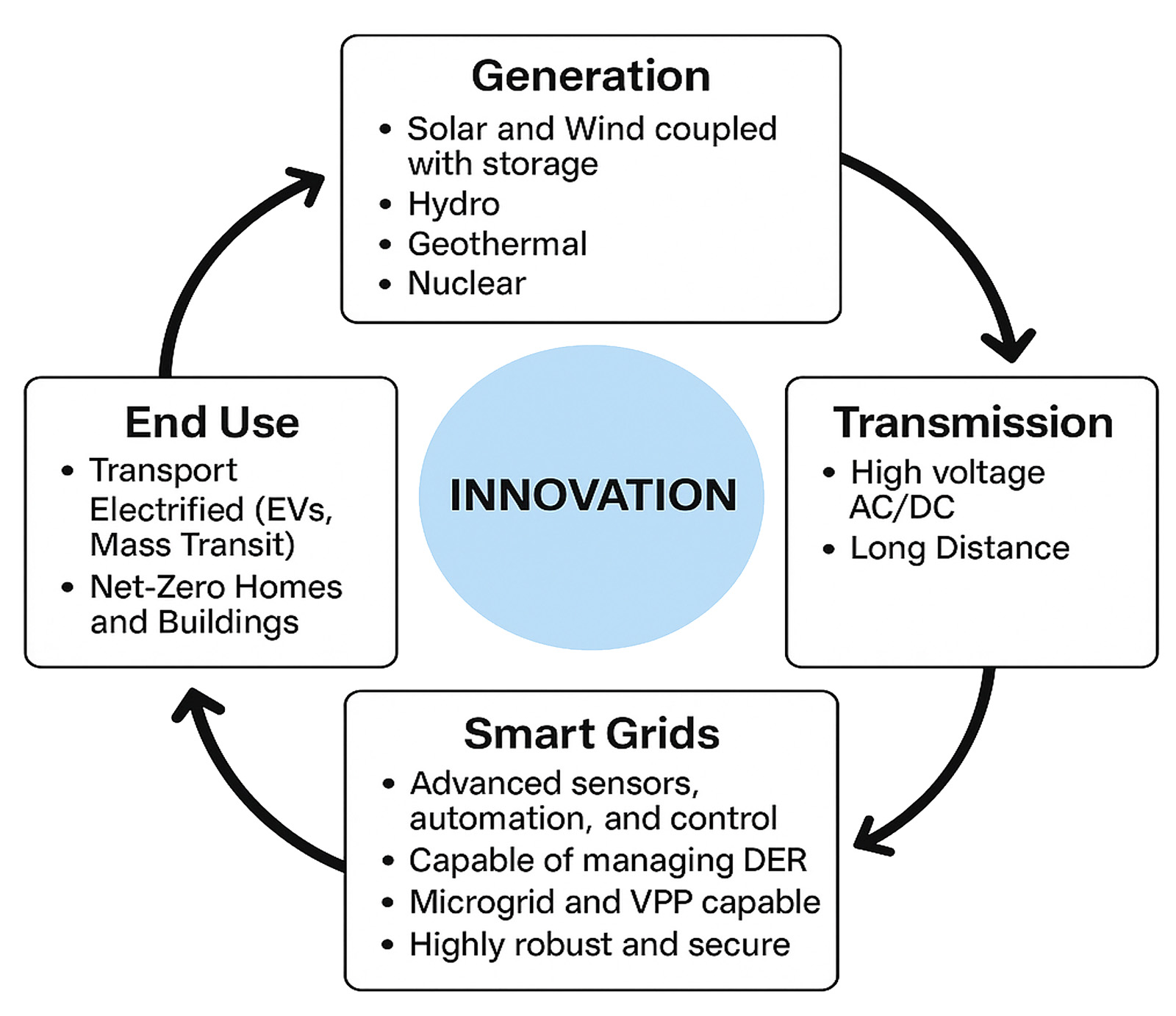
Figure 8: Flow Diagram Demonstrating an Innovative Pathway
Source: Authors.
The core elements of a clean energy system comprise generation linked by transmission of electricity (HVDC or AC) over long distances along an east–west national corridor, combining different forms of generation across provinces as inputs into the national grid. The national grid serves as the backbone for fully and effectively utilizing each province’s resource base, enabling trade, seamless interprovincial transfers, and the balancing of supply and demand across Canada’s interconnected networks. This is technically feasible and has been demonstrated over the past six decades in the operation of the existing system, although currently, the flows are mainly north–south to US markets.
The core elements of the energy system shown in Figure 8 are described further in the “Transmission” and “Generation” sections below.
The national grid enables cost-effective integration and expansion of the provincial resource base in support of a broad-based electrification strategy for end-use energy services in all sectors including transport (EVs, mass transit, freight), net-zero homes and buildings (heating and cooling with heat pumps) and industrial process requirements.
Smart grids will be integral to the distribution system supporting distributed resources (small-scale generation, micro-grids and VPPs). With the emergence of AI and the digital economy, smart urbanization enabled through distributed energy resources demonstrates a clear pathway for efficiency and productivity gains in all end use sectors of the economy.
Canada’s reimagined energy landscape will require a fivefold increase in the installed electricity system capacity from 80 GW (2025) to 400 GW (2050) resulting in a decrease of carbon emissions from 700 Mt to 200 Mt (see Table 1). The scope and scale of the bold vision presented here means Canada’s future electricity system will displace 12,800 PJ of oil and gas energy, delivering 3550 TWh, serving all sectors of the economy by 2050. The intermediate stepping stone to 2035 is intended to calibrate the decisions required for achieving the target for the 2050–2060 time frame. The formidable challenge for Canada’s energy transition rests on being able to achieve a fivefold increase in the installed system capacity with near-zero or low-carbon solutions by 2050.
The massive expansion of electricity requirements is directly related to the displacement of oil and gas, and the new demand emerging from data centres and expected growth of AI applications across the economy.
The most cost-effective and rapid pathways for electrification with the greatest potential to reduce greenhouse gas emissions are found in sectors where commercially available technologies already exist. These include transportation (electric vehicles, freight, mass transit, and rail); buildings for space heating and cooling (air-source and geo-exchange heat pumps); and industry (electric arc furnaces for steelmaking and electrified process heating in manufacturing). The displacement of 4,000 PJ of oil corresponds to an emissions reduction of approximately 292 Mt CO₂e, while displacing 4,000 PJ of natural gas yields a reduction of about 224 Mt CO₂e.
Why Electricity? The Economic Value of Electrification is High
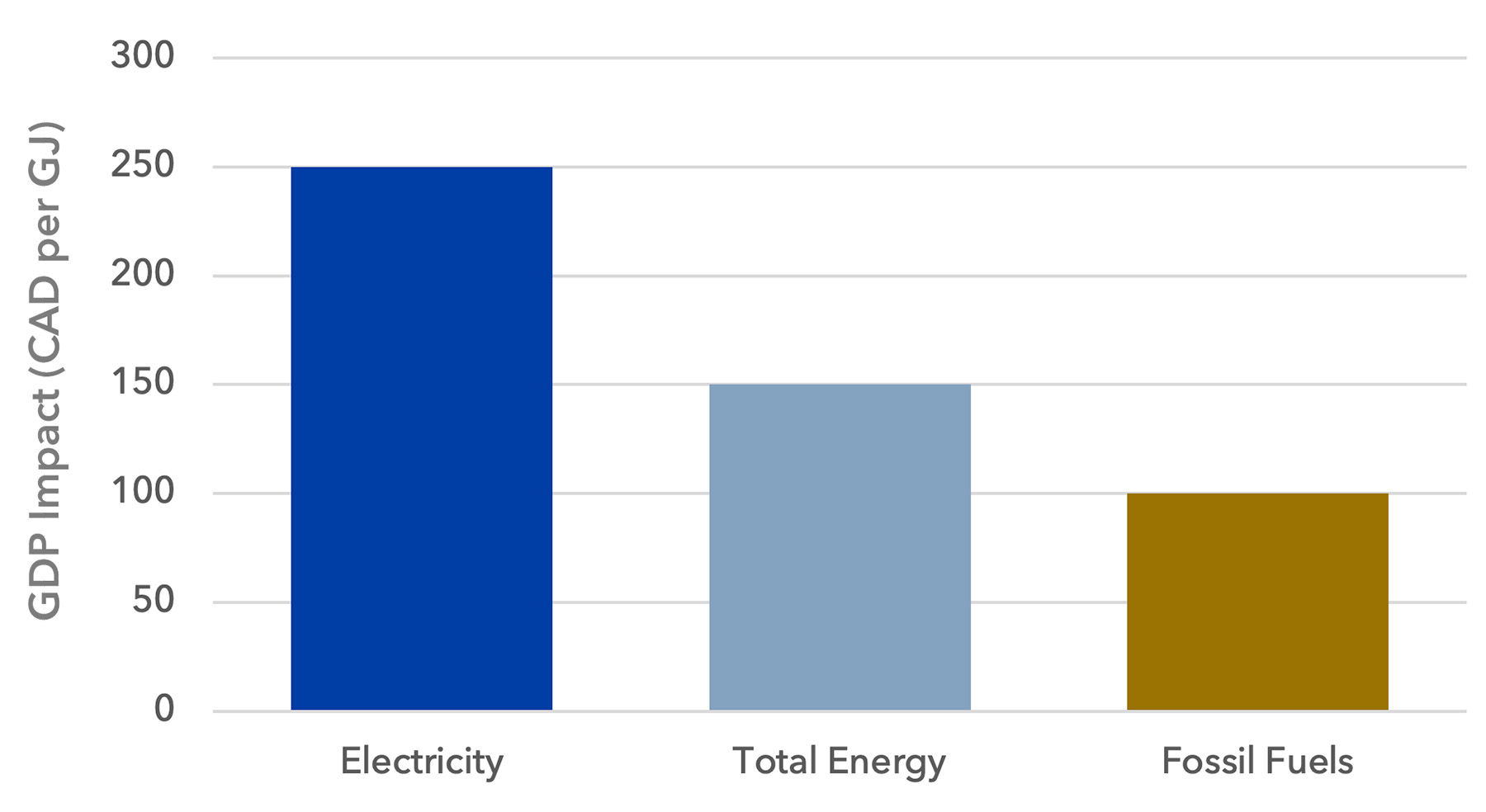
Electricity's contribution to GDP growth is greater by a large margin in comparison to fossil fuel resources. Electricity is a higher-quality form of energy — more efficient and versatile — and those sectors relying heavily on electricity (for example, technology, services, manufacturing) tend to have higher productivity per unit of energy. Electricity intensity (electricity consumed per dollar of GDP) is generally lower than total energy intensity, indicating greater economic output per unit of electricity. For example, energy intensity (energy consumed per dollar of GDP) in Canada has declined by ~39 percent since 1971.5 This reflects improved energy efficiency, structural shifts in the economy (such as advanced manufacturing, ICT) and adoption of cleaner technologies.
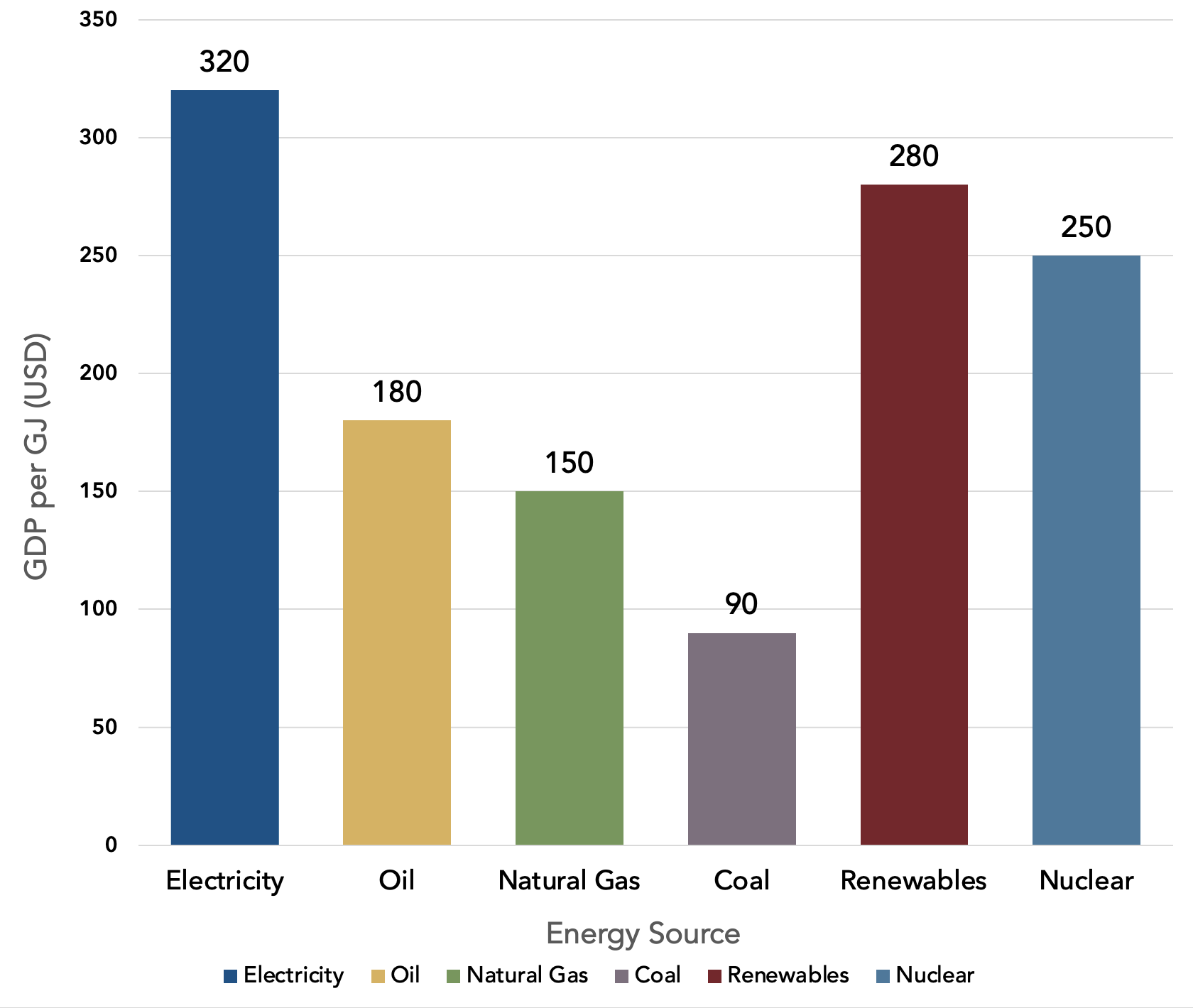
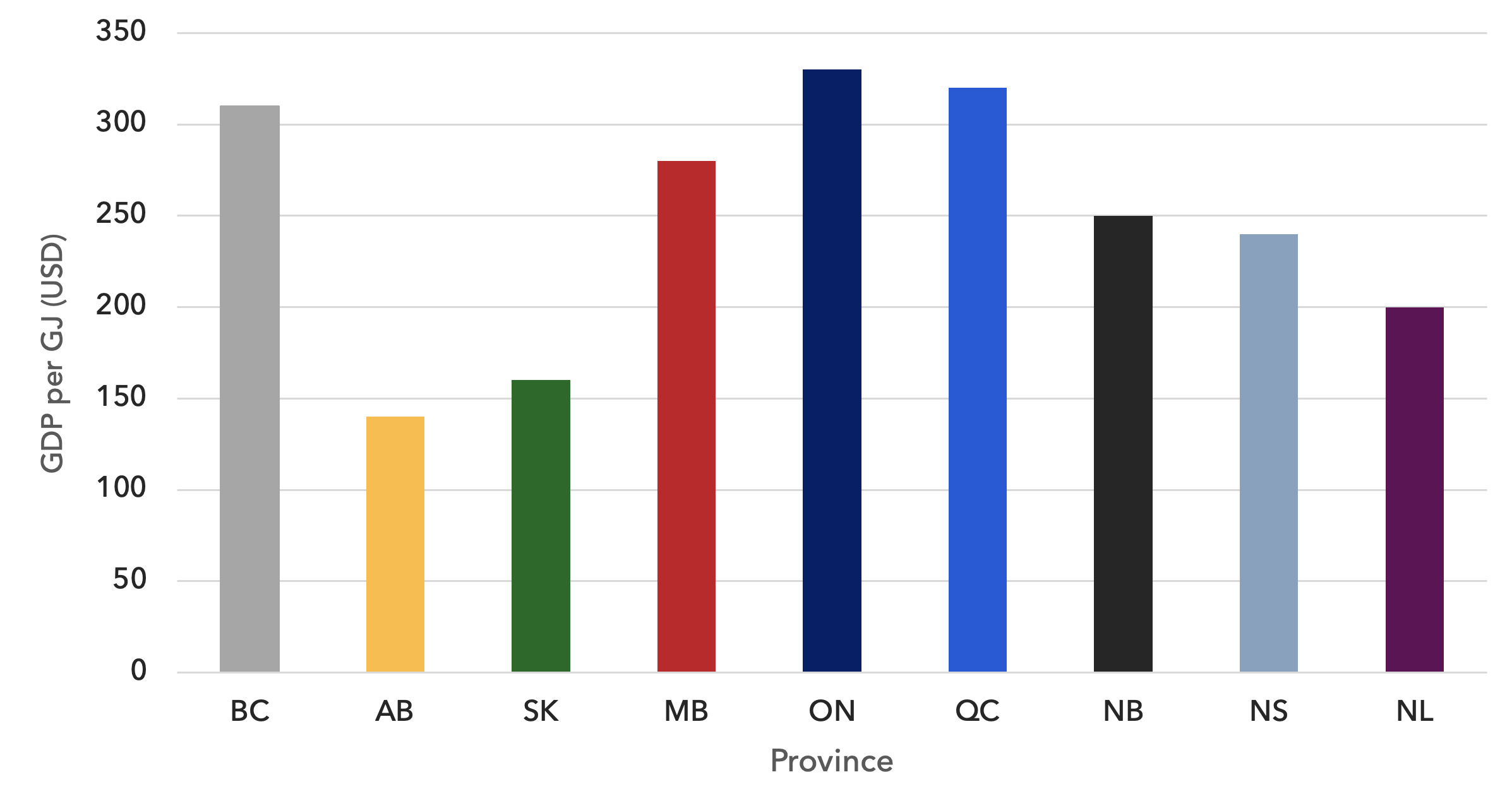
Electricity delivers the highest GDP per gigajoule (GJ), reflecting its role in high-value sectors like services, tec, and manufacturing (Stern and Cleveland 2009; Fouquet and Pearson 2011). Figures 9a and 9b below are a visual comparison of GDP output per unit of energy by source in Canada with renewables and nuclear indicating a stronger productivity profile compared to coal, oil and natural gas.
Figure 9a: GDP per Unit of Energy Use by Resource Type in Canada
Source: Authors, from data compiled from: Government of Canada (2024); Our World in Data (2024); U.S. Energy Information Administration (2024); Statistics Canada (2024); Enerdata, (2024); Energy Hub (2024).
Figure 9b: GDP per Unit of Energy Use by Province in Canada
Source: Authors, from data compiled from (ibid.).
Ontario and British Columbia lead in energy productivity, with the highest GDP per GJ, reflecting efficient energy use and strong service-based economies. Quebec and Manitoba also show high productivity, likely due to their reliance on hydroelectric power. Alberta and Saskatchewan have lower GDP per GJ, reflecting energy-intensive industries such as oil, gas and mining. Newfoundland and Labrador and Nova Scotia show moderate productivity, influenced by mixed energy sources and economic structures.
The sectoral differences demonstrate how oil sands and heavy industry are energy intensive but contribute less to GDP per unit of energy, whereas commercial, public and the ICT sectors, which are more electrified, show higher GDP returns per unit energy (Canada Energy Regulator 2019).
Figure 10: Comparative GDP Impact per Unit of Energy
Source: Authors, from data compiled from: Government of Canada (2024); Our World in Data (2024); U.S. Energy Information Administration (2024); Statistics Canada (2024); Enerdata, (2024); Energy Hub (2024).
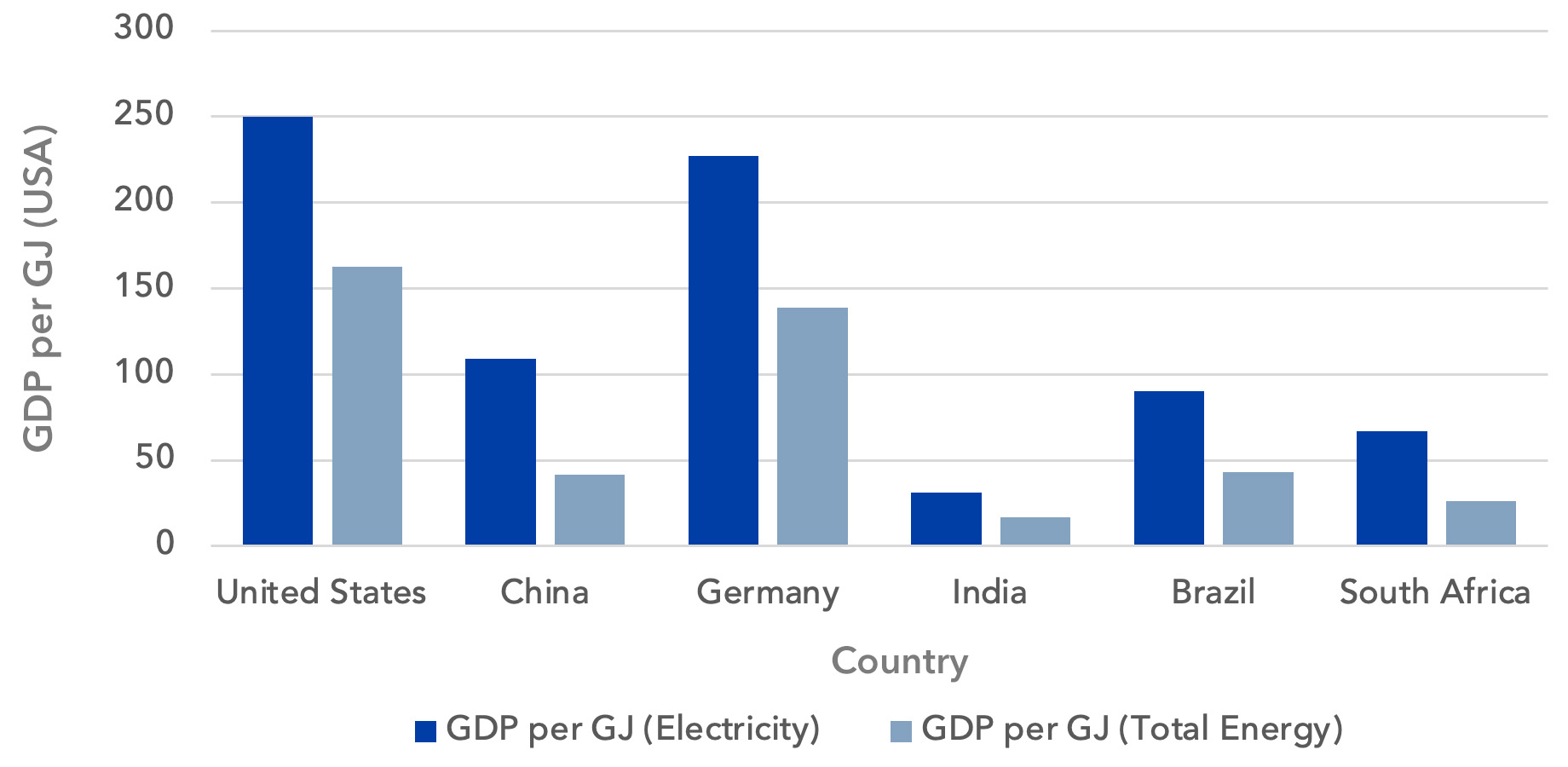
Electricity use yields higher GDP per GJ than total energy use in most countries, especially in developed economies such as the United States and Germany. This suggests that electricity is a more productive form of energy, likely due to its use in high-value sectors like services, technology and manufacturing. In countries such as India and South Africa, the gap is narrower, reflecting a more fossil-fuel-intensive energy mix and lower economic output per unit of energy.
Figure 11: A Comparison of National GDP per GJ of Electricity with GDP per GJ of Total Energy
Source: Authors from data compiled from (ibid.).
Electricity demand has a stronger correlation with GDP growth than total energy demand primarily because of its facilitation of automation, digital infrastructure and high-value services best described as the intangibles economy.
Global trends show a compelling steady increase in the new net demand for electricity and increasing share of electricity in primary energy consumption. With the emergence of AI and its applications in all sectors of the economy, data centres are a new primary driver of demand. Additionally, other drivers of increasing electricity demand include industrial electrification, cryptocurrency mining and increasing electrification of buildings and vehicles. Projections of future load all predict significant growth (Tsuchida et al. 2024; National Academies of Sciences, Engineering, and Medicine 2025).
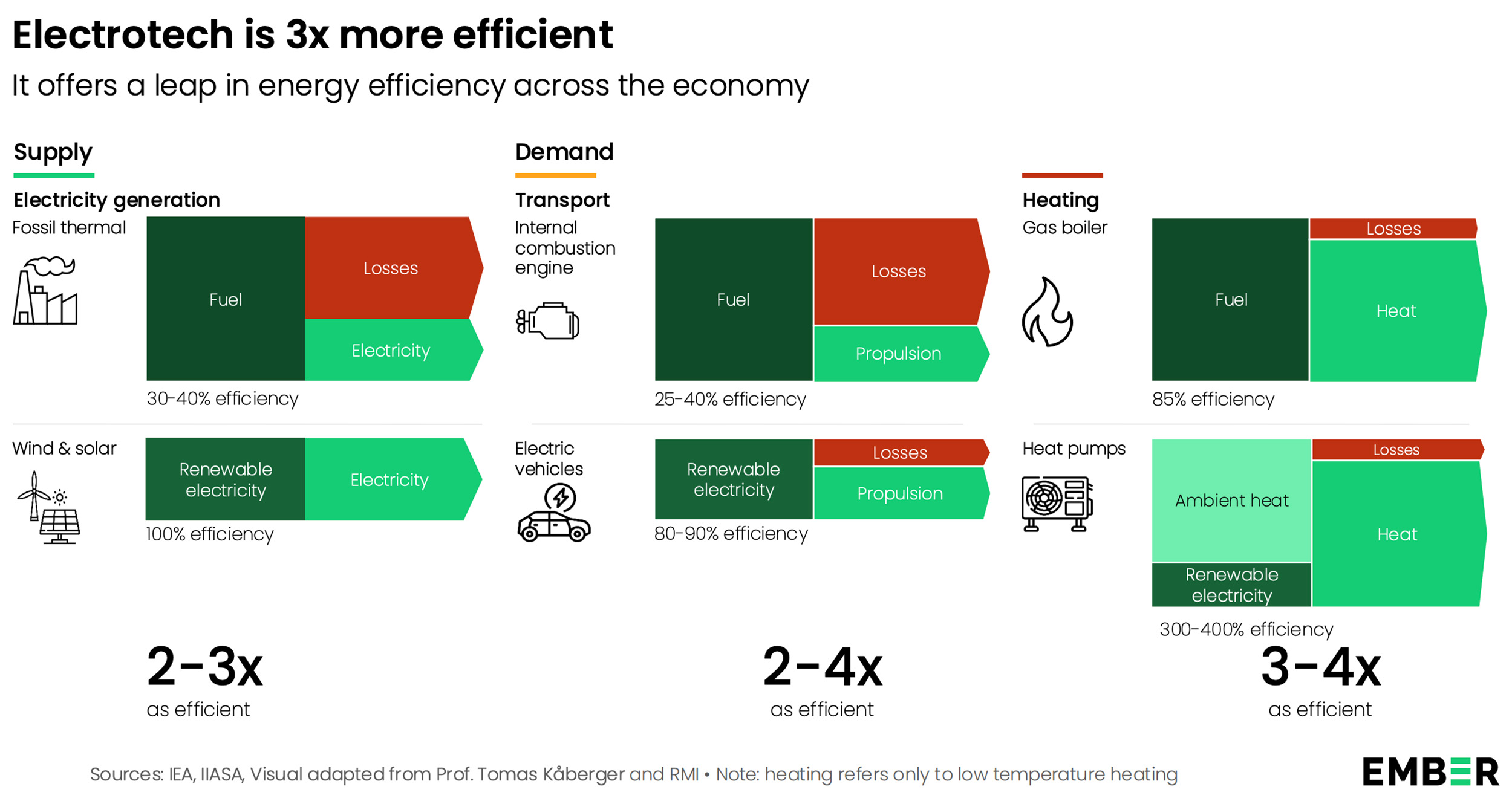
The rising share of electricity in primary energy use reflects both the growth of the intangibles economy and the influence of technological advancements, greater efficiency of inputs to the manufacturing sector and flexible applications in the service sector. An increasing share of electrification in final primary energy consumption delivers twin benefits: new wealth creation and a clear pathway to decarbonization through clean energy technologies and products across industrial and consumer sectors.
Figure 12: Efficiency Advantage of Electrotechnolgies
Source: Ember (2025).
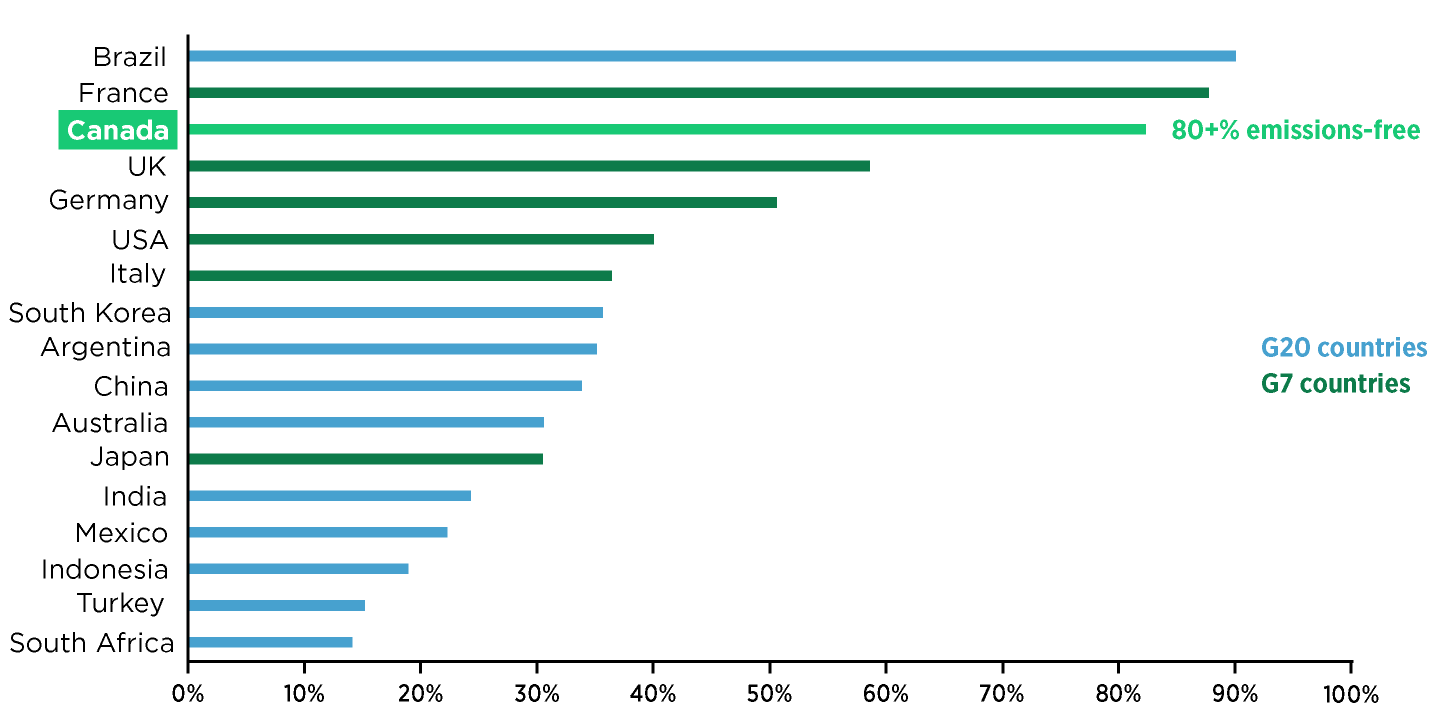
Canada’s current share of 23 percent electricity is at par with advanced economies such as France and the European Union.
Figure 13: Share of Non-emitting Electricity Generation
Source: Canadian Electricity Advisory Council (2024).
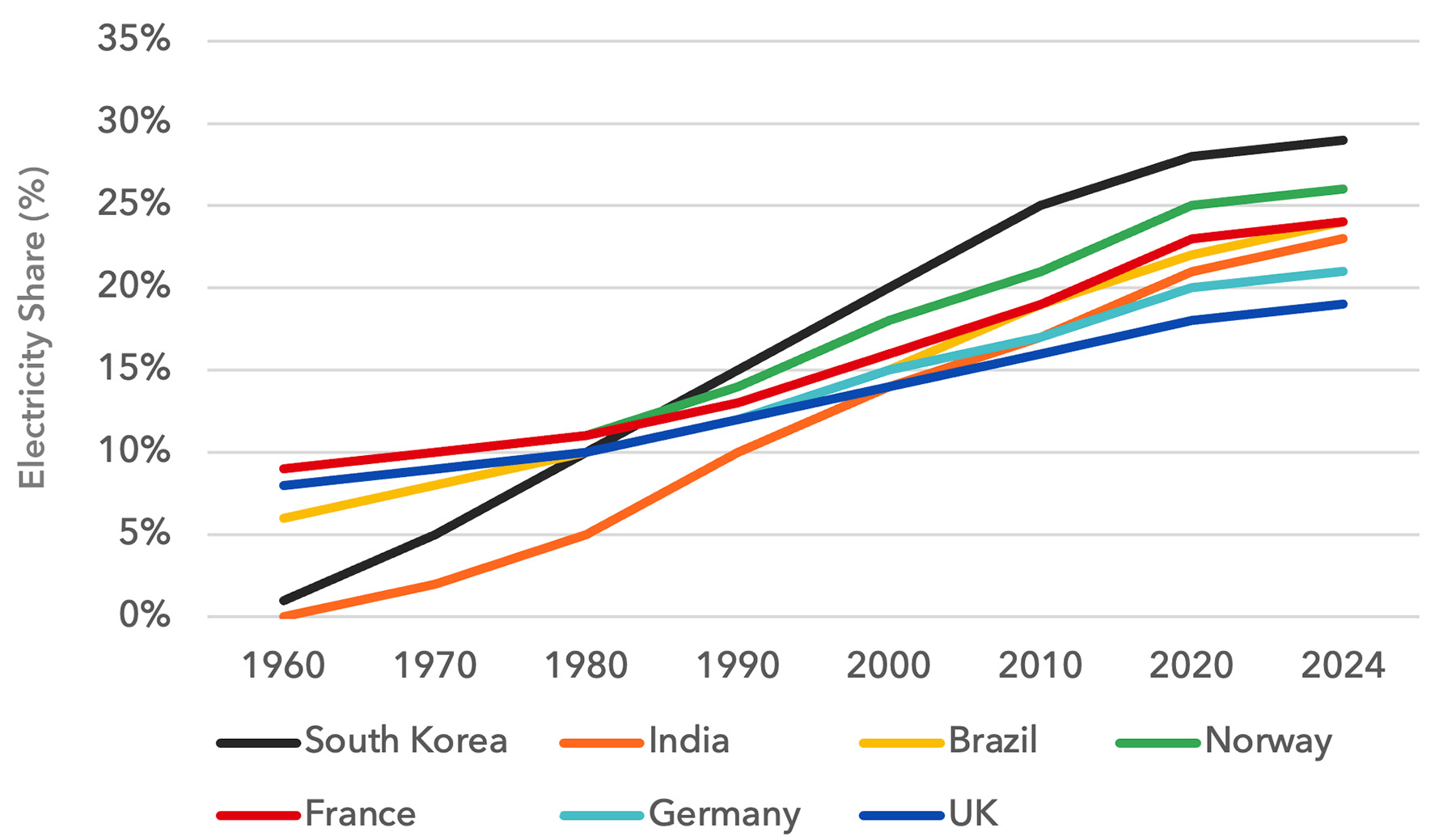
Global historical trends attest to the increasing role for electricity in supporting a productive economy. For example, note China’s share increasing steadily after 1980 and then outstripping the advanced economies, reflecting its industrial growth and electrification of the economy.
Figure 14a: Share of Electricity in Final Energy Consumption for the United States, European Union, China and Japan (1960–2024)
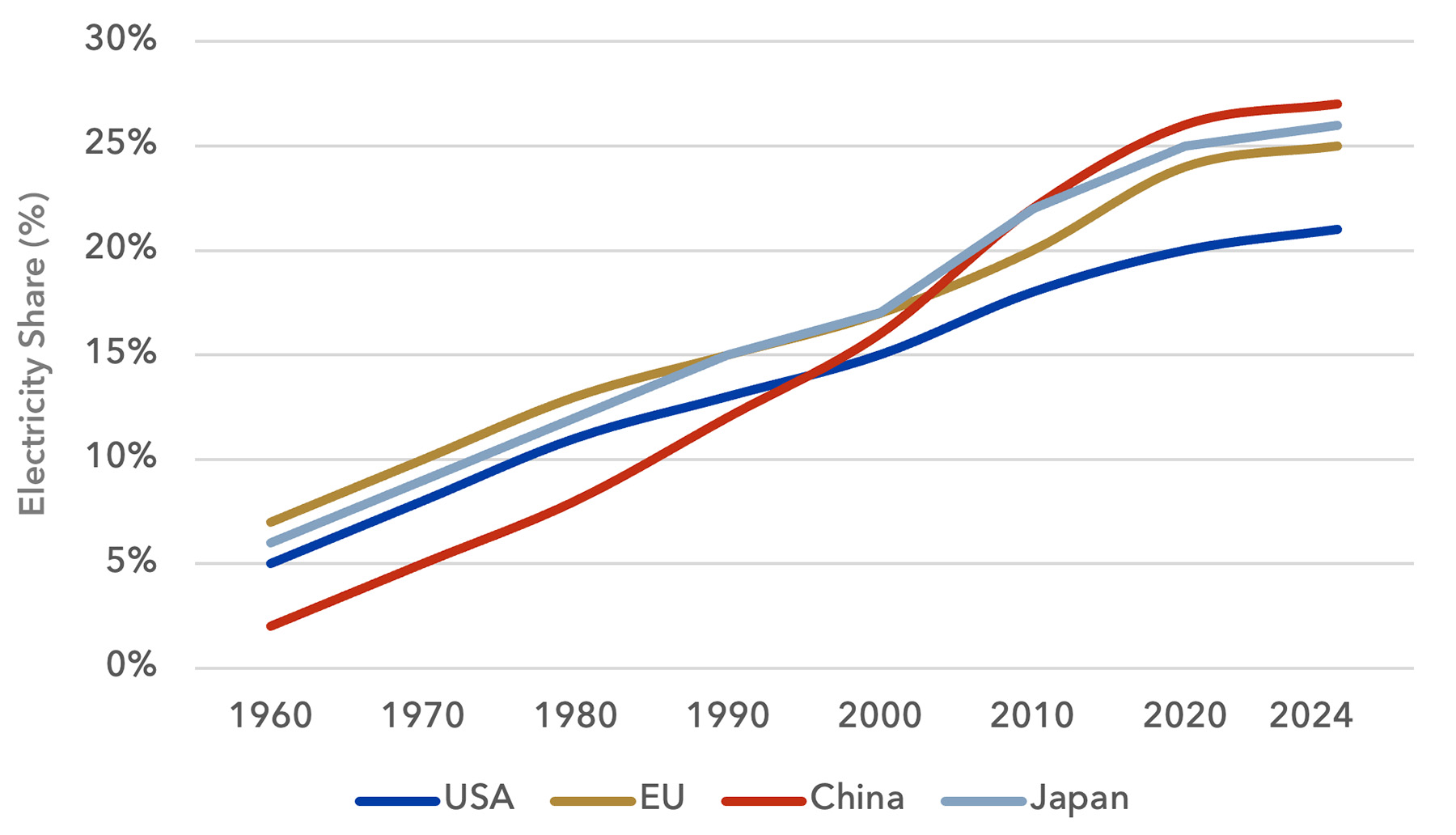
Figure 14b: Share of Electricity in Final Energy Consumption for South Korea, India, Brazil, Norway, France, Germany and the United Kingdom (1960–2024)
Source: Authors, data sources from: International Energy Agency (2021b; 2021c; 2025).
In summary, the focus here is on broad-based electrification as the primary national strategy to improve economic productivity and efficiency while achieving aggressive yet essential goals to ensure Canada meets its national and international obligations.
Endnotes
5. See Conference Board of Canada’s “Energy Intensity,” at www.conferenceboard.ca/hcp/energy-intensity-aspx-2/.